Blog
Omakase Reservation Tips for a Better Sushi Night
09.21.2026 | Blog
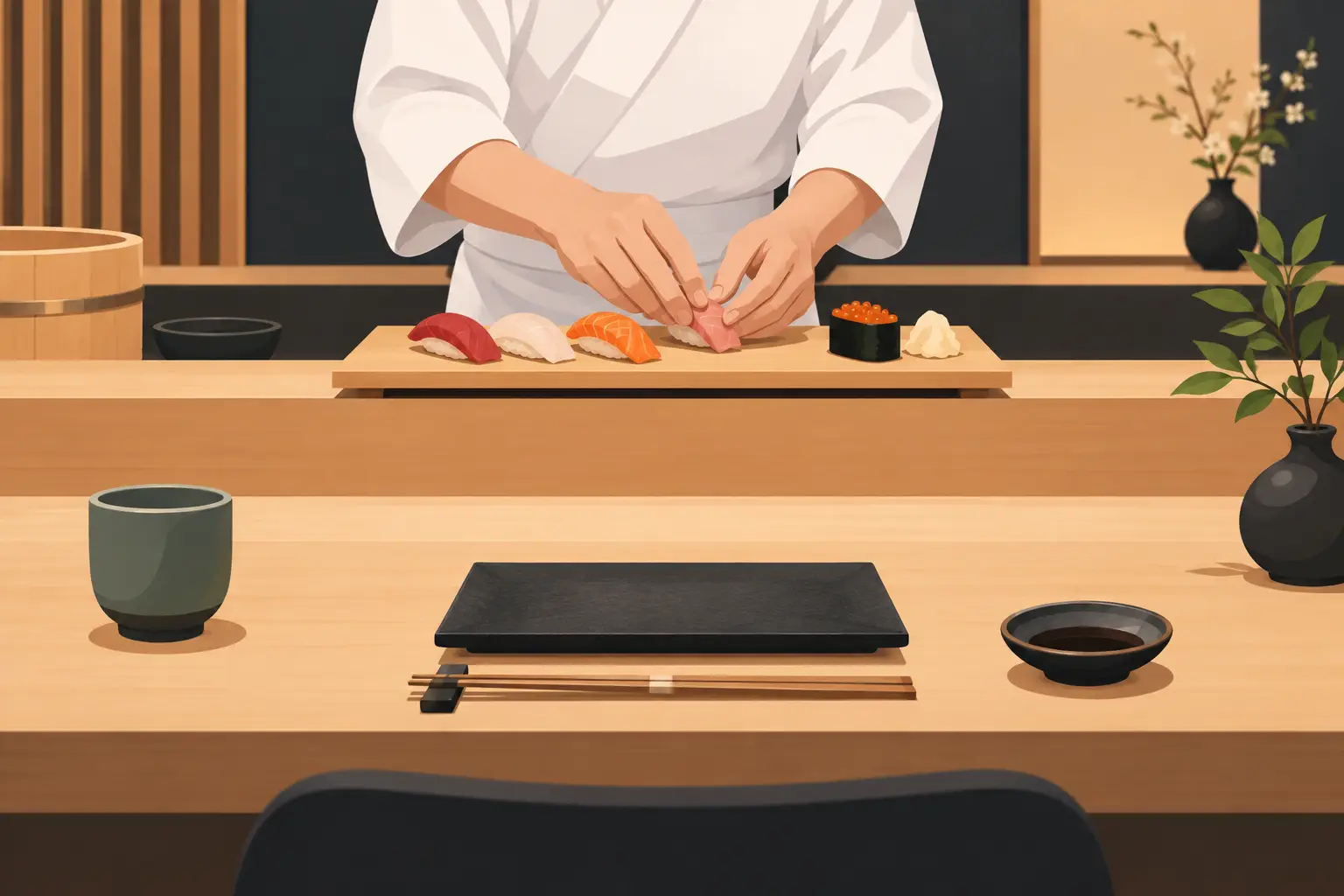
A good omakase dinner begins before the first piece of sushi reaches the counter. The best omakase reservation tips are less about knowing formal rules and more about giving the restaurant enough information to take good care of you. A few thoughtful choices - the right course, an accurate party count, clear dietary communication, and an on-time arrival - help turn a dinner reservation into the kind of meal you remember.
Omakase means “I leave it up to you.” The chef chooses the progression based on what is tasting best, what has arrived in peak condition, and how flavors can build across the meal. That trust is part of the pleasure. It also means that a little planning makes a real difference.
Omakase Reservation Tips Start With the Right Occasion
Not every omakase meal needs to be a major celebration. A chef-selected sushi dinner can be a weeknight date, a catch-up with a friend, a birthday, or simply an answer to a craving for exceptionally fresh fish. Still, the occasion helps determine what reservation will feel right.
For a relaxed dinner, choose a time when you will not be rushing from work or watching the clock afterward. Omakase is best enjoyed at an unhurried pace, especially when the chef is serving pieces in sequence. If you are planning a celebration, mention it when you book. Restaurants can often help make the evening feel considered, but they need advance notice to do so well.
Think about your guests, too. Someone who loves trying new fish may enjoy the surprise of a broader chef’s selection. Someone newer to sushi may prefer an approachable course with familiar favorites alongside a few discoveries. There is no prize for choosing the largest menu. The right course is the one that lets everyone enjoy the meal comfortably.
At UO NIGIRI, accessible omakase courses make that choice easier. A dinner can feel special without requiring a once-a-year budget, leaving room for guests to return when seasonal fish changes.
Choose Your Course With Appetite in Mind
Before reserving, look at the available courses and consider what you have eaten that day. Omakase can be more substantial than it first appears, particularly when rice, cooked dishes, or additional bites are part of the progression. Booking a larger course after a heavy late lunch may leave you too full to appreciate the final pieces.
On the other hand, do not under-order simply because you expect a very formal experience. Casual-style omakase can be one of the most satisfying ways to eat sushi: a focused succession of well-prepared fish, properly seasoned rice, and a meal paced by someone who understands the ingredients.
If your party has different appetites, it is usually better to ask about course options before arriving than to assume every guest must order identically. Policies differ by restaurant, particularly at a counter or during busy service, so clarity ahead of time prevents an awkward decision at the table.
Let the Season Shape Expectations
The point of omakase is not to receive the same list of fish every visit. Market availability changes. Some species shine only for a short season; others vary in richness depending on where they were caught and how they have matured. A chef may feature a rare fish one week and a familiar, beautifully handled favorite the next.
That is why it helps to reserve with an open mind. If you have one must-have item, ask whether it is likely to be available, but avoid treating a chef’s selection like a fixed menu. The most memorable piece may be something you would not have ordered on your own.
Book Early, Then Confirm the Details
For Friday and Saturday dinners, holiday weekends, and popular dining hours, reserve as soon as your plans are reasonably firm. Earlier reservations often work well for guests who prefer a quieter room or have plans afterward. Later seatings can suit diners who want to settle in after a long day. Neither is automatically better - it depends on your schedule and the energy you want from the evening.
Use the reservation name that the restaurant can easily recognize, and enter a phone number you will have with you. If you are booking for a group, confirm the final headcount before the restaurant’s stated deadline. A table set for four is very different from a table set for six, especially when seating is limited and courses are prepared to order.
If plans change, cancel or adjust the reservation as early as possible. This is considerate to the restaurant and to other diners hoping for a table. It also gives the kitchen and service team a more accurate picture of the night ahead.
Arrive a Few Minutes Early, Not Half an Hour Early
Aim to arrive about five to 10 minutes before your reservation. That gives you time to park, settle in, and begin without interrupting the meal’s rhythm. Arriving very early does not always mean a table is ready, particularly when the previous seating is still enjoying dessert or the final sushi course.
Running late? Call as soon as you know. A brief message is far better than silence. In omakase dining, timing affects more than the table. Fish is sliced, seasoned, and served at specific moments, and a late arrival can compress the experience for you and your guests.
Share Allergies Clearly and Honestly
This is one of the most useful omakase reservation tips because seafood-focused meals can involve ingredients that are not obvious from a menu. State true allergies when you reserve, including fish, shellfish, soy, sesame, gluten, or other relevant ingredients. Be specific about the severity and whether cross-contact is a concern.
An allergy, an intolerance, a religious restriction, and a personal preference are not the same thing. Restaurants need that distinction to respond responsibly. Saying that you “do not like” an ingredient is helpful, but it does not carry the same kitchen protocol as an allergy. Being direct lets the chef suggest what is possible without making promises that are unsafe or unrealistic.
Some accommodations may be easier with advance notice; others may not be possible in a sushi kitchen that handles seafood and soy throughout service. If your restriction is serious, ask before booking rather than hoping it can be solved after you are seated. The goal is not to make the experience difficult. It is to make it safe and enjoyable.
Trust the Pace of the Meal
Omakase is designed as a sequence, not a race. One piece may be clean and delicate, followed by something richer, then a bright garnish or a warm course that resets your palate. Try each sushi piece soon after it is served. Temperature, texture, and the balance between fish and rice can change quickly.
If the chef has already brushed on sauce or added seasoning, taste it first before reaching for soy sauce or wasabi. The seasoning is usually intentional. You can always add more, but you cannot take it away.
This does not mean you must know every etiquette rule. Ask questions. A warm, knowledgeable sushi restaurant should be glad to explain an unfamiliar fish, the origin of a cut, or why it is being served at that moment. Curiosity is welcome. Just keep conversations with the chef respectful of their work and of other guests’ experience.
Keep Drinks in Balance
A crisp beer, sake, tea, or sparkling water can complement sushi, but very sweet or heavily flavored drinks can cover the subtler qualities of the fish. If you are ordering sake, tell your server whether you tend to prefer light and dry, fruity, or richer styles. A useful recommendation is more valuable than ordering by label alone.
The same goes for alcohol overall. Omakase rewards attention. A drink can enhance the meal; too many can make the progression blur together.
Let the Chef Take You Somewhere New
The best reservation is one that leaves enough room for surprise. Great sushi is not only about luxury ingredients. It is about sourcing, timing, knife work, rice temperature, and knowing when a particular fish is at its best. When seafood is selected from markets such as Tokyo’s Toyosu Market and trusted domestic and international suppliers, the menu can offer more range than the usual tuna-salmon-yellowtail routine.
Come hungry, communicate what matters, and let the meal unfold piece by piece. Your reservation is not a test of sushi knowledge. It is an invitation to sit down, trust the craft, and enjoy what the market has made possible that day.
MEDIA

SIGN UP OUR NEWSLETTER
 13354 Washington Blvd.,
Los Angeles, CA 90066
Lunch: Temporarily Closed
Dinner: Mon - Sat 5:30 pm - 10:00 pm (Last Call 9:30 pm)
Sun Closed