Blog
Rare Japanese Sushi Fish You May Want to Try
08.05.2026 | Blog
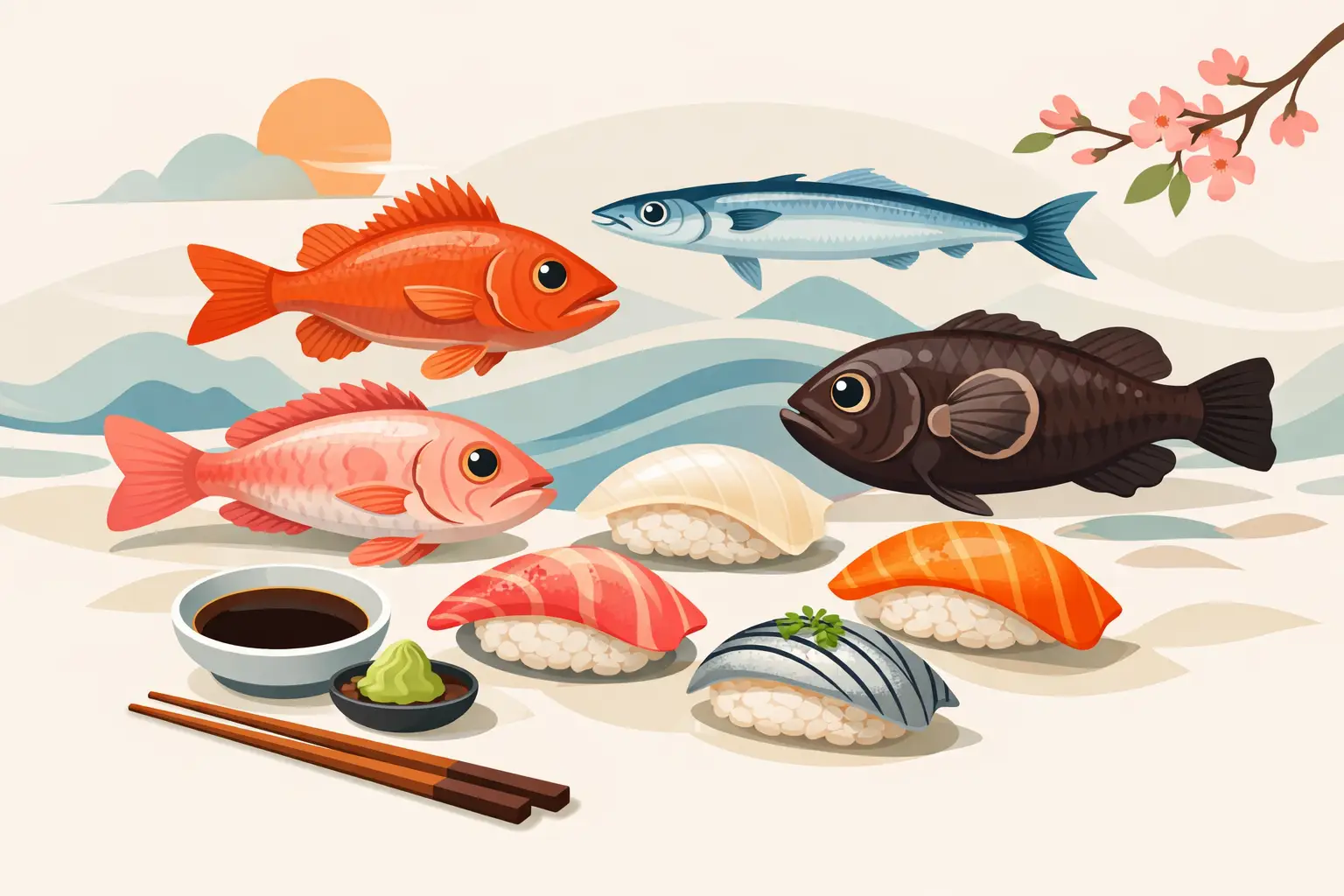
The most memorable piece of sushi is not always the one you recognize. Rare Japanese sushi fish can arrive at the counter with a name you have never heard, a color that surprises you, and a flavor that changes what you thought sushi could be. For diners who usually order tuna, salmon, yellowtail, or shrimp, that first unfamiliar nigiri is often the moment omakase becomes more than a meal.
The point is not to order something unusual simply because it is unusual. In Japanese sushi, rarity can come from a short season, a limited catch, a specific growing region, or the skill required to prepare a fish well. The best experience comes from letting the chef choose a fish at its peak and giving yourself permission to taste before deciding whether it is for you.
What Makes Rare Japanese Sushi Fish Rare?
A fish does not need to be exotic to be rare on a sushi menu. Some varieties are commonplace in Japan but difficult to bring to the United States in the right condition. Others appear only briefly during migration or are caught in small quantities. Then there are fish whose quality changes dramatically depending on how they are handled from boat to market to kitchen.
Seasonality is central. Sushi is often discussed as though the best fish is simply the freshest fish, but freshness alone is not the full story. A fish also needs the right amount of fat, firmness, and flavor development. Some are best immediately after landing; others benefit from a short period of careful aging that softens the texture and concentrates umami.
That is why a changing omakase menu matters. A chef with direct relationships to fish markets and suppliers can select from what is excellent now, rather than relying on the same fixed list every week. At UO NIGIRI, that sourcing includes fish from Tokyo's Toyosu Market, New Zealand, and the East and West Coasts, with each fish prepared in-house for the way it will be served.
Rare Japanese Sushi Fish to Know
Kohada: the small silver fish with big character
Kohada, or gizzard shad, is a classic Edo-style sushi fish. It is small, silver-skinned, and traditionally cured with salt and vinegar. That preparation is not a shortcut. It is the craft. Done well, kohada has a clean, bright flavor and a satisfying contrast between its delicate flesh and its lightly firm skin.
It can be a surprise for diners who expect every piece of nigiri to taste rich or buttery. Kohada is more savory and structured. It often tells you a great deal about a sushi chef because the curing must be precise: too little and the fish can taste flat; too much and the vinegar takes over.
Sayori: delicate halfbeak
Sayori, also called Japanese halfbeak, is prized in spring. Its pale flesh is subtle, lightly sweet, and almost translucent. The fish is often presented with its silver skin attached, giving the nigiri a beautiful visual line without making it heavy.
This is a fish for diners who enjoy halibut, fluke, or other clean white fish but want something more refined. It may be brushed with a small amount of soy sauce or paired with citrus and salt. Because its flavor is so quiet, careful knife work and proper temperature make a real difference.
Isaki: sweet, firm grunt fish
Isaki, or chicken grunt, is a summer favorite in Japan. It has a gentle sweetness, more body than many white fish, and a pleasant springy texture. Depending on the individual fish, it can carry a little richness under its clean finish.
For someone hesitant about unfamiliar seafood, isaki is an excellent place to start. It does not have the strong mineral character of some silver-skinned fish, yet it offers more personality than a standard mild white fish. A chef may serve it simply to highlight that balance.
Kinmedai: golden eye snapper
Kinmedai is recognizable by its vivid red skin and fuller texture. Known as golden eye snapper, it is valued for its soft fat and gentle sweetness. The skin is often lightly seared or warmed to bring out aroma and give the fish a more rounded mouthfeel.
It is a good choice for people who love fatty tuna but want to try richness in another form. Kinmedai is not identical to toro - it is cleaner, with a different kind of silkiness - but it offers the same sense that a single piece of nigiri can feel both delicate and generous.
Nodoguro: blackthroat seaperch
Nodoguro is one of the fish sushi lovers get excited about when it appears. Its name translates roughly to “black throat,” but its eating quality is all about its fatty, tender flesh. The fish is often lightly torched, which releases a deep aroma and gives the surface a faintly crisp edge.
Because nodoguro has considerable fat, a small garnish can be useful. A touch of salt, grated daikon, or citrus may cut through the richness without hiding it. It is a special-occasion fish, though the best way to enjoy it is still simple: eat it promptly, while the rice and fish are at their intended temperature.
Aji and iwashi: familiar in Japan, overlooked here
Aji, Japanese horse mackerel, and iwashi, sardine, are not necessarily rare in the ocean. What is rare is finding them handled with enough care to serve as exceptional nigiri. Both are oily fish, which means they can be deeply savory and satisfying when pristine, but less forgiving when they are not.
Aji is often topped with ginger, scallion, or a small amount of grated aromatics. Iwashi can be richer and more assertive, with a clean oceanic flavor that fans of mackerel tend to love. These are not “beginner” choices for everyone, but they are among the most rewarding pieces for diners who want to understand the range of traditional sushi.
How to Order Unfamiliar Nigiri With Confidence
You do not need a deep sushi vocabulary to enjoy a rare fish. The easiest approach is to tell the chef what you already like. If you enjoy buttery fish, ask for something rich. If you prefer clean, mild flavors, say so. If you like mackerel or oysters, mention that too. Those preferences give the chef a useful starting point.
Omakase is especially helpful because the progression is part of the meal. A thoughtful chef may begin with lighter white fish, move toward silver-skinned or seasoned varieties, and finish with richer selections. The sequence lets your palate adjust, rather than asking you to choose a challenging fish at random.
There are trade-offs, and that is part of the pleasure. A rare fish may be available for only a day or two. Another may be extraordinary one week and absent the next because the catch did not meet the restaurant's standards. A menu that changes is not inconsistency. It is often evidence that the kitchen is buying according to quality rather than forcing a promised item onto the plate.
When the nigiri arrives, eat it soon after it is placed in front of you. The rice is seasoned and shaped to support that particular fish, and its warmth is intentional. Extra soy sauce is rarely needed, particularly if the chef has already brushed the fish. If you are unsure, one bite is the best answer.
Why Sourcing and Preparation Matter More Than the Name
A rare name alone does not make sushi better. A respected fish can still disappoint if it was poorly handled, cut without care, or served at the wrong moment. Conversely, a modest fish in excellent condition can be the piece you remember most.
That is why whole-fish buying and in-house preparation are meaningful. When a restaurant receives and breaks down fish itself, the team can assess texture, fat, aroma, and yield before deciding how to serve each portion. One section may be best as clean nigiri; another may benefit from curing, a brief sear, or a different cut.
For diners, the practical benefit is simple: the meal has a point of view. You are not just choosing from a catalog of seafood. You are tasting decisions made from the market onward, shaped by what the fish needs that day.
The next time an unfamiliar piece is offered, consider saying yes to one. It may be a bright, vinegared kohada, a softly seared kinmedai, or a fleeting seasonal fish that will not return for months. That small leap is often where a casual sushi dinner becomes a story worth sharing.
MEDIA

SIGN UP OUR NEWSLETTER
 13354 Washington Blvd.,
Los Angeles, CA 90066
Lunch: Temporarily Closed
Dinner: Mon - Sat 5:30 pm - 10:00 pm (Last Call 9:30 pm)
Sun Closed