Blog
Omakase for Beginners Guide: First Visit Tips
08.07.2026 | Blog
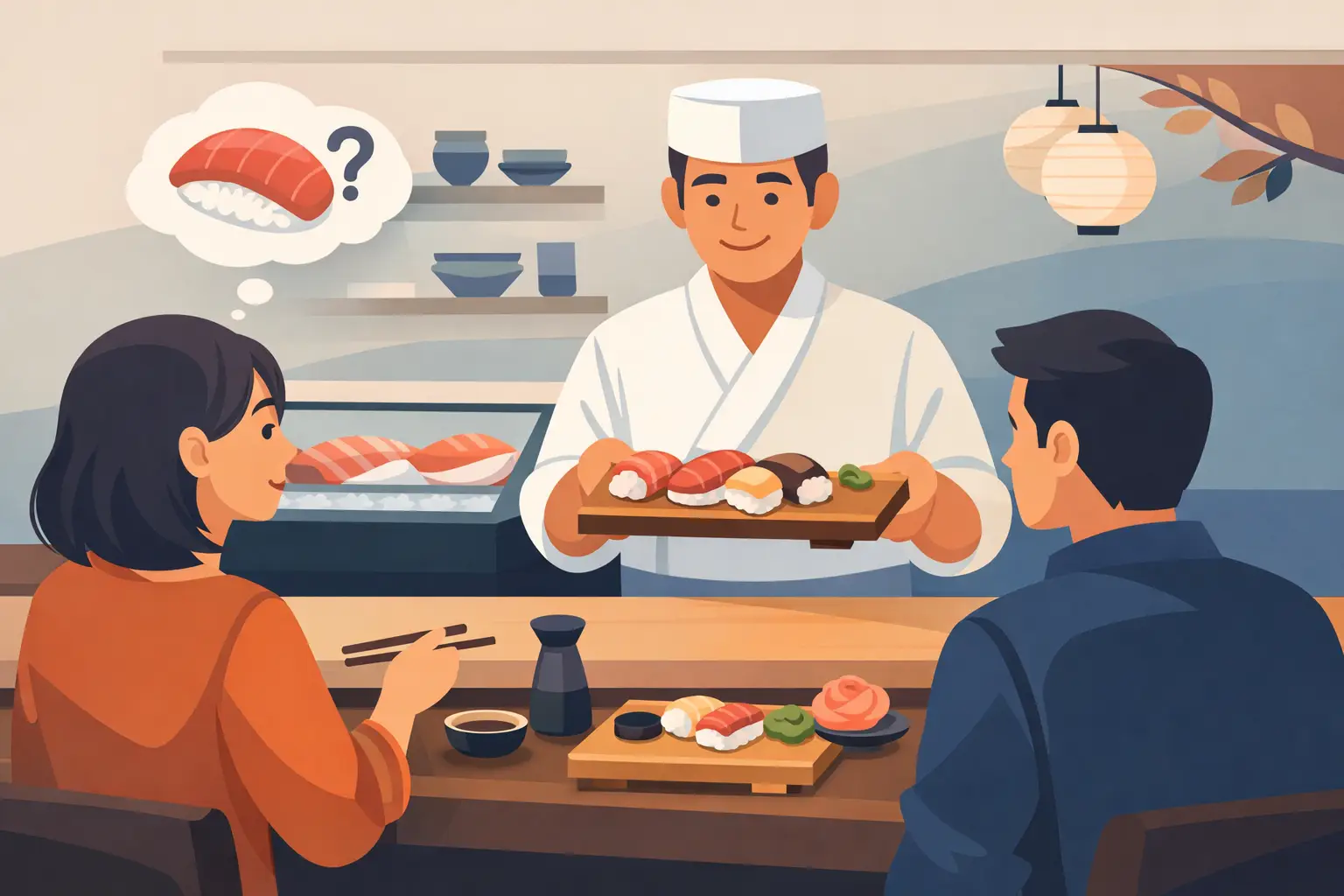
The first piece may arrive before you have fully settled into your seat: a slice of fish over warm, lightly seasoned rice, chosen for that particular day. That is the appeal of omakase. This omakase for beginners guide will help you arrive with confidence, understand what the chef is offering, and enjoy the meal without worrying about getting every detail perfectly right.
What Omakase Actually Means
Omakase is a Japanese phrase that means, in essence, “I’ll leave it up to you.” Rather than ordering each item yourself, you place your meal in the chef’s hands. The chef builds a progression based on the fish that is tasting best, the season, and the balance of the meal.
At a sushi restaurant, omakase often centers on nigiri: a carefully shaped bite of rice topped with fish. You may also receive small appetizers, sashimi, hand rolls, soup, or a sweet finish. Every restaurant has its own format, so omakase can be a quick, relaxed dinner or a longer meal with many courses.
The important part is not formality. It is trust. A good omakase lets you taste fish you might not have selected from a familiar sushi menu, while giving the chef room to serve each piece at its best moment.
Why the Fish Changes From Visit to Visit
Omakase is not meant to be a fixed greatest-hits menu. The fish changes because the market changes. A chef may find especially beautiful mackerel one week, a delicate white fish the next, or different cuts of tuna depending on what is available and in season.
That variation is a strength, not a surprise to avoid. Fish has natural differences in texture, fat, sweetness, and intensity. Lean tuna may taste clean and mineral-like, while fatty tuna is rich and soft. A silvery fish such as kohada can be cured for brightness. Some white fish are served simply to highlight their subtle flavor; others may be lightly brushed with sauce or finished with citrus.
At UO NIGIRI, owner-chef Yusuke Irie’s fish-wholesale background informs this daily decision-making. Fish is sourced through direct relationships and from places including Tokyo’s Toyosu Market, New Zealand, and the East and West Coasts of the United States. Buying and preparing whole, wild Bluefin tuna in-house also creates access to different cuts and textures from the same fish. For a first-time guest, that means the meal can be both approachable and genuinely personal to the day’s catch.
What to Expect at Your First Omakase
A casual omakase experience should feel guided, not intimidating. Once you are seated, the server or chef may explain the course and ask about allergies or dietary restrictions. Mention those clearly before the meal begins. Raw fish, shellfish, gluten, soy, sesame, and rice vinegar can all matter, depending on the preparation.
The first course often begins with lighter flavors and moves toward richer ones. This is not an unbreakable rule, but it helps your palate notice the contrast between fish. A mild white fish may come before salmon or toro, while a hand roll may arrive near the end, when its nori is still crisp and fragrant.
Each piece is usually served already seasoned. The chef may add soy sauce, a brush of nikiri, grated ginger, scallion, wasabi, or citrus. Before reaching for extra soy sauce, take the first bite as presented. You can always adjust later, but tasting it first shows you what the chef intended.
You Do Not Need to Know Every Fish
No sushi quiz is waiting at the counter. If you do not recognize a fish, ask what it is and how it was prepared. Most chefs and servers are happy to explain whether a piece is lightly cured, aged, seared, or served at room temperature to bring out its flavor.
Curiosity makes the meal better. A simple question such as, “Is this fish usually richer or lighter?” can help you build a vocabulary for what you enjoy. By the end of dinner, you may discover that your favorite piece was something you had never ordered before.
How to Eat Omakase Comfortably
The best rule is simple: eat each piece soon after it is served. Temperature and texture are part of sushi. Rice cools, nori softens, and the balance can change quickly when a piece sits for several minutes.
You may use chopsticks or your fingers for nigiri. Both are acceptable. If using your fingers, gently pick up the nigiri from the sides, turn it fish-side down if you are dipping it in soy sauce, and touch only the fish to the sauce. Soaking the rice can make the piece fall apart and hide the fish’s flavor.
Wasabi is another area where people often overthink things. If the chef has already placed wasabi between the fish and rice, try it that way first. Add more only if you want more heat. Mixing a large amount of wasabi into a dish of soy sauce is common in casual settings, but it tends to overwhelm more delicate fish.
Pickled ginger is best treated as a palate cleanser between different pieces, not as a topping. A sip of water, tea, sake, beer, or wine can serve the same purpose. If you are drinking alcohol, choose something that supports rather than buries the fish. Crisp sake, a light beer, or a dry white wine often works well, though personal preference matters more than rigid pairing rules.
The Etiquette That Matters Most
Omakase etiquette is mostly about consideration. Arrive on time, let the restaurant know about restrictions early, and avoid wearing strong perfume or cologne that could interfere with the aroma of the food. If you are seated at a counter, keep personal items tidy so the space remains comfortable for everyone.
Photos are usually fine if the restaurant permits them, but take them quickly. The fish is not waiting for the camera. If the chef is working directly in front of you, a brief thank-you or question about a memorable piece is more meaningful than trying to document every course.
There is no need to speak quietly as if you are in a museum. Omakase can be a date-night dinner, a celebration, or a weeknight meal. Be present, enjoy the conversation, and give each piece a little attention when it arrives.
Choosing the Right Omakase for a First Visit
Price and pace are worth considering before you book. A longer, higher-priced omakase can be wonderful for a major occasion, but it is not the only legitimate way to experience chef-selected sushi. For beginners, an accessible course can be the smarter choice: enough variety to learn what you like, without the pressure of a lengthy, formal meal.
Look for a restaurant that talks specifically about its fish and its sourcing rather than relying only on luxury language. Freshness is not just about how recently fish arrived. It also depends on species, handling, aging when appropriate, temperature, knife work, and how the rice is prepared. A chef who understands the product from market to counter has more ways to make a simple piece of nigiri taste complete.
It also helps to choose a setting where you can ask questions. A welcoming restaurant gives you room to say that it is your first omakase, that you love tuna but are unsure about uni, or that you would like to try something new. The chef can guide the experience without making it feel like a test.
A Few Things Worth Saying Up Front
Tell your server or chef about true allergies, dietary restrictions, pregnancy-related concerns, and foods you strongly dislike before the first course. Do not assume every item can be easily swapped at the last moment, especially when the meal is planned around a daily selection.
Preferences are useful, too. If you are open to trying most fish but nervous about sea urchin, say so. If you prefer cooked items, ask whether the course includes seared or cooked options. Omakase is chef-led, but thoughtful hospitality includes listening to the guest.
Your first omakase does not need a special occasion or expert knowledge. Come hungry, be open to the day’s fish, and let one well-made piece at a time show you why sushi can be much more than the rolls you already know.
MEDIA

SIGN UP OUR NEWSLETTER
 13354 Washington Blvd.,
Los Angeles, CA 90066
Lunch: Temporarily Closed
Dinner: Mon - Sat 5:30 pm - 10:00 pm (Last Call 9:30 pm)
Sun Closed