Blog
Whole Bluefin Tuna Preparation, Cut by Cut
08.11.2026 | Blog
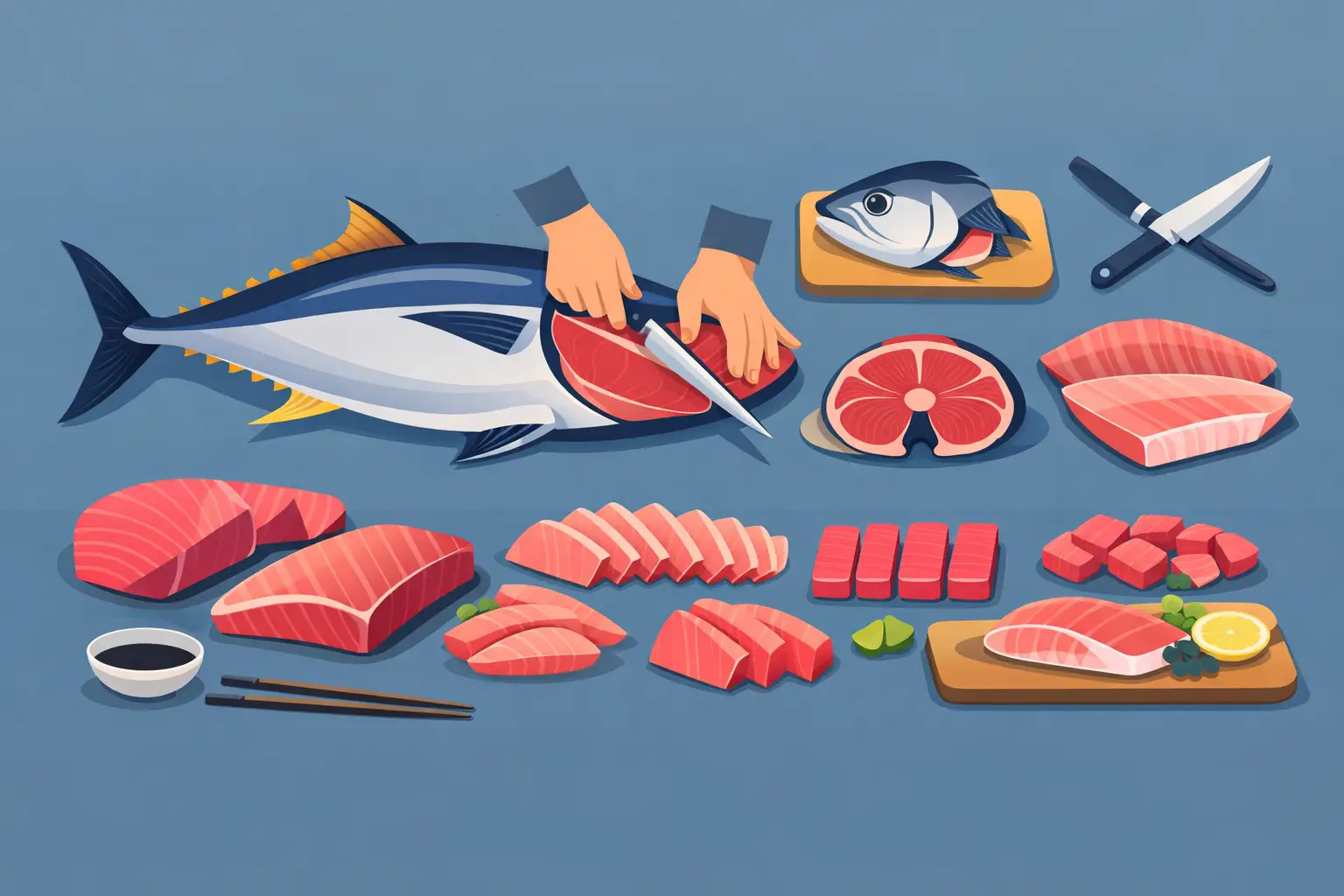
A whole bluefin tuna arrives with more than one flavor to offer. Proper whole bluefin tuna preparation is the work of recognizing those differences, protecting the fish from the moment it is received, and serving each cut when its texture and richness are at their best. For sushi diners, that work is why one piece of tuna can taste clean and lean while the next feels silky, deep, and almost buttery.
At UO NIGIRI, buying whole, wild Bluefin reflects a simple belief: a chef should understand the fish before it becomes nigiri. It creates more responsibility in the kitchen, but it also gives the chef control over freshness, aging, portioning, and the range of tuna that reaches the counter.
Why Whole Bluefin Tuna Preparation Matters
Bluefin is often treated as a single menu item. In reality, it is a large fish with distinct muscles, fat distribution, grain, and texture throughout its body. A pre-portioned block can be convenient, but it does not offer the same view of the fish as a whole tuna. Breaking down the fish in-house allows a sushi chef to assess each section individually instead of forcing every piece into one standard.
That distinction matters when the goal is a balanced omakase meal. Lean akami can open the palate with a clean, mineral flavor. Chutoro brings more richness without overwhelming the rice. Otoro is prized for its abundant marbling and soft texture, but even it should be served thoughtfully. A well-paced meal is not simply a progression toward the fattiest bite. It is a conversation between different expressions of the same fish.
Whole fish purchasing also makes better use of Bluefin beyond the familiar cuts. Depending on the tuna and the chef's plan, areas near the collar, cheek, belly edge, or around the bone may offer beautiful flavor and texture. Some are best served as sushi, while others are better lightly seared, chopped, or prepared for staff meal. Respect for the fish means finding the right use for each part, not treating the fish as a source of only a few premium slices.
From Sourcing to the Sushi Counter
Good preparation starts before the tuna reaches the restaurant. Bluefin quality depends on species, season, harvest method, handling on the boat, temperature management, and the condition of the fish at market. A fish with excellent color is not automatically the right fish for sushi. The chef also considers aroma, firmness, fat quality, and how the tuna is likely to develop over the coming days.
Owner-chef Yusuke Irie draws on decades of fish wholesale and culinary experience to source seafood through trusted channels, including Toyosu Market, New Zealand, and the East and West Coasts of the United States. That direct fishmonger perspective is useful because sourcing is not a matter of choosing the most expensive label. It is about selecting fish with a clear purpose at the counter.
Wild Bluefin can vary widely. One fish may have exceptional belly fat but a softer lean section. Another may have remarkably vivid akami and a firmer, more structured texture. Season, water temperature, diet, size, and time of year all leave their mark. The best choice depends on what the chef wants to serve and when guests will be eating it.
Responsible sourcing is part of the equation as well. Bluefin is a highly managed fishery, and professional buyers work within regulated supply chains that provide required documentation and traceability. For diners, that behind-the-scenes discipline supports confidence in both the fish's origin and the care taken before it reaches the plate.
The First Steps of Whole Bluefin Tuna Preparation
Once a whole tuna is received, timing and temperature become central. The fish must stay cold and clean while the team prepares the workspace, tools, storage materials, and cutting plan. Bluefin is valuable, but it is also delicate in its own way. Careless handling can bruise flesh, introduce unwanted moisture, or affect texture.
The breakdown begins by separating major sections with deliberate knife work. The loin sections are removed along the fish's natural structure, preserving as much usable meat as possible. From there, the chef identifies the lean back portions, the transition areas with moderate marbling, and the rich belly sections. These are not interchangeable cuts. Their grain and fat content call for different trimming and slicing decisions.
Cleanliness is not an afterthought at this stage. Knives, boards, hands, towels, and storage surfaces need close attention throughout the process. The aim is to preserve the pure flavor of the tuna, which means avoiding cross-contact, excess handling, and unnecessary exposure to warm air.
A whole fish also presents bones, sinew, and membranes that take patience to remove. This is where experience shows. Removing too aggressively wastes usable tuna; removing too little can leave a slice chewy or uneven. The work may be invisible when a piece of nigiri is placed in front of a guest, but it is one reason the best sushi feels effortless to eat.
Sorting the Cuts by Character
Akami is the deep red lean meat many diners recognize first. When handled well, it has a clean, savory flavor and a satisfying, focused bite. Depending on the fish, it may be served plain, lightly brushed with soy, or briefly marinated to add depth while keeping the tuna's natural character present.
Chutoro sits between lean and full-fat belly. It often gives diners the most balanced Bluefin experience: tender, rich, and still structured enough to hold its own against seasoned rice. Otoro comes from the fattiest belly areas and calls for a careful slice. Too thick and its richness can become heavy; too thin and it may lose the luxurious texture people expect.
The chef may also find less obvious sections worth highlighting. A slightly firmer cut might benefit from a precise cross-grain slice. A delicate belly portion may be better reserved for a night when it is at peak condition. This is why the availability of specific tuna cuts can change. It is not inconsistency. It is the chef responding to the fish in front of them.
Aging Is About Timing, Not Age
Many guests assume fresher always means better, but Bluefin does not follow a single clock. Some tuna is beautiful soon after receiving, while other sections benefit from a short, closely monitored resting period. During aging, natural enzymes gently relax the muscle structure and develop savory flavor. The goal is never to mask poor quality. Aging should reveal what was already good about the fish.
The right timing depends on the individual tuna and the cut. Lean meat may show its best texture on a different day than a fatty belly section. Storage temperature, wrapping, moisture control, and daily inspection all matter. A chef tastes and evaluates, then decides what belongs on that evening's omakase.
This is also why Bluefin can taste different from one visit to the next. That variation is part of seasonal sushi. Rather than promising one fixed experience, a thoughtful sushi bar lets the fish guide the menu.
How the Final Slice Changes the Bite
The last moments before service matter as much as the breakdown. Tuna is sliced according to its grain, thickness, and intended presentation. A lean piece may be cut to emphasize tenderness and a clean finish. A fatty cut may need a different angle so it softens gracefully on the tongue.
Rice is equally important. Bluefin has enough flavor to stand on its own, but properly seasoned shari gives it lift. The gentle acidity of the rice keeps richer cuts from feeling too heavy, while its warmth helps the fat in chutoro or otoro open up. The balance should feel complete in one bite, not like fish placed on top of rice as an afterthought.
A chef may serve Bluefin simply with a touch of soy, wasabi, or a small garnish chosen to support rather than cover it. The best accompaniment depends on the cut. Lean tuna may welcome a little extra savoriness, while a richly marbled belly cut often needs very little beyond rice and room to speak for itself.
What Diners Can Look For
You do not need to be a tuna expert to appreciate careful preparation. Notice the difference in color, texture, and flavor between pieces. Akami should feel clean and lively, not watery. Chutoro should have richness with definition. Otoro should melt gently, but it should still taste like tuna rather than only fat.
If you are enjoying omakase, let the sequence do some of the teaching. Start with curiosity rather than a search for the most luxurious cut. Ask which part of the Bluefin you are being served and how the chef chose to prepare it. A good sushi meal makes room for those questions without making anyone feel out of place.
The next time Bluefin arrives at your table, take a moment with the first bite. Behind it is a whole fish, a disciplined process, and a chef deciding exactly when that particular cut is ready to be enjoyed.
MEDIA

SIGN UP OUR NEWSLETTER
 13354 Washington Blvd.,
Los Angeles, CA 90066
Lunch: Temporarily Closed
Dinner: Mon - Sat 5:30 pm - 10:00 pm (Last Call 9:30 pm)
Sun Closed