Blog
The Difference Between Nigiri and Sashimi
08.10.2026 | Blog
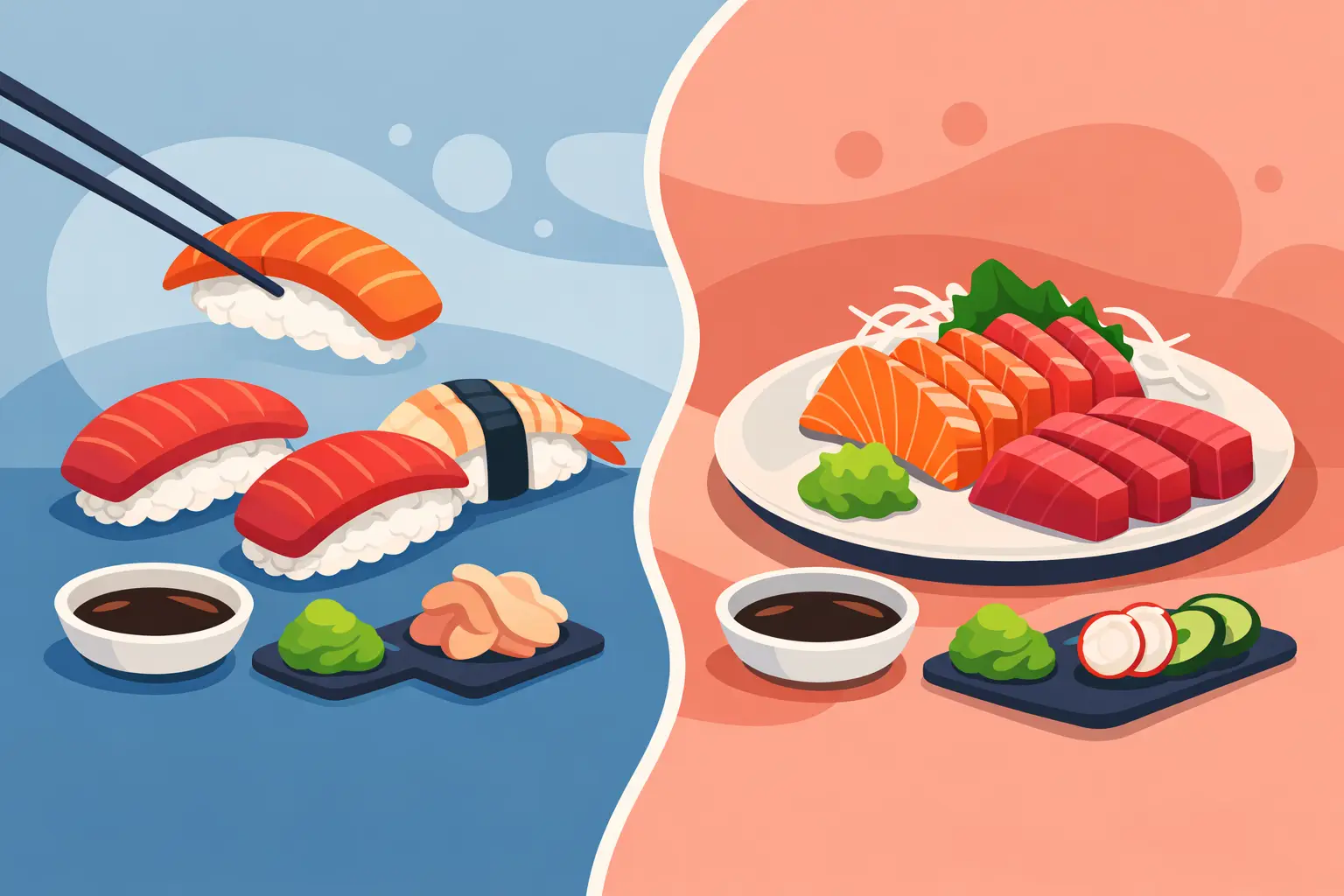
A beautiful slice of tuna can appear on a small mound of rice or arrive on its own, and the distinction changes the entire bite. The difference between nigiri and sashimi comes down to more than presentation: it is about rice, knife work, seasoning, temperature, and the chef’s intention for each piece of fish.
For diners building confidence with Japanese food, the good news is simple. Neither choice is more advanced, more authentic, or automatically better. Nigiri and sashimi offer two distinct ways to appreciate excellent seafood. What you choose depends on whether you want the fish to stand alone or to be balanced with carefully prepared sushi rice.
What Is Nigiri?
Nigiri is a style of sushi made with a hand-formed portion of seasoned rice, usually topped with a slice of fish or seafood. Its name comes from the Japanese verb nigiru, meaning “to grasp” or “to squeeze.” The chef shapes the rice gently by hand, then places the topping, called neta, over it.
A classic piece might be tuna, salmon, yellowtail, sea bream, scallop, shrimp, or eel. Most nigiri features raw fish, but it does not have to. Cooked shrimp, lightly torched fish, marinated mackerel, and grilled eel are all common nigiri toppings.
What makes nigiri memorable is the relationship between its two main elements. The rice, known as shari, is seasoned with vinegar, salt, and sugar. It should be tender enough to separate easily in your mouth while still holding its shape from the chef’s hand. The fish should be sliced to a thickness and angle that suit its texture, richness, and natural flavor.
A skilled chef may place a small amount of wasabi between the fish and rice, brush the fish with sauce, or add a precise garnish. These details are not decoration. They are seasoning decisions, made to bring a particular fish into focus.
Nigiri Is Sushi Because It Includes Seasoned Rice
In the United States, “sushi” is often used as a general word for raw fish. In Japanese cuisine, sushi specifically refers to food made with vinegared rice. Nigiri is sushi because it includes shari. A roll is also sushi for the same reason.
That distinction explains why nigiri has a different rhythm from a plate of sliced fish. Rice adds gentle acidity, a little sweetness, body, and warmth. It can soften the impact of richer fish such as fatty tuna while giving leaner fish a fuller, more complete bite.
What Is Sashimi?
Sashimi is thinly sliced seafood, most often served without rice. It puts the fish at the center of the plate with little standing between the diner and the ingredient itself. Tuna, salmon, yellowtail, fluke, scallop, squid, and mackerel are familiar examples, though seasonal menus may include far more unusual selections.
Because there is no rice to balance the flavor, sashimi makes handling and preparation especially visible. You notice the fish’s texture immediately: the clean snap of a white fish, the creamy richness of toro, the delicate sweetness of scallop, or the pleasant chew of squid. Temperature, aging, curing, and slicing technique all matter.
Sashimi is often served with daikon radish, shiso leaf, ginger, and wasabi. These accompaniments can refresh the palate, but they should not hide the seafood. The point is to taste the fish clearly.
Although raw seafood is the most common association, sashimi is not simply a synonym for “raw fish.” The word refers to the sliced preparation. Some seafood may be lightly cured, briefly seared, or treated in a way that develops its flavor while preserving its sashimi character.
Nigiri vs. Sashimi: The Difference on the Plate
The easiest way to remember the difference between nigiri and sashimi is this: nigiri is fish or seafood over seasoned rice, while sashimi is sliced seafood served without rice.
That one difference creates several others. Nigiri is typically a composed, one-bite piece. The chef has already decided how much rice, fish, wasabi, and sauce belong together. Sashimi gives you a more direct view of the ingredient and more freedom to taste it on its own or with a small touch of soy sauce and wasabi.
Nigiri also tends to feel more filling because of the rice. If you want a satisfying meal with variety, a progression of nigiri can offer different fish, textures, and seasonings while carrying you through dinner. Sashimi can feel lighter and is an excellent choice when you want to focus on seafood, limit rice, or share a few special cuts with the table.
Neither is inherently healthier. Both can be nutrient-rich choices, and both depend on the seafood, portion size, sauces, and the rest of the meal. Sashimi has no rice, while nigiri brings the energy and satisfaction of a measured serving of seasoned rice. The better choice is the one that fits your appetite and what you want from the meal.
Why Fish Quality Matters Differently for Each
Great fish is essential for both preparations, but sashimi leaves nowhere for inconsistency to hide. Its quality comes through in aroma, color, clean flavor, texture, and how the fish has been handled from source to cutting board.
Nigiri demands that same level of seafood quality, plus another layer of craft. The rice must be seasoned correctly and held at the right temperature. The chef needs to understand how firmly to shape it and how to slice each fish so the topping and rice meet cleanly. Too much rice can overwhelm a delicate fish. Rice packed too tightly loses its airy texture.
This is why an omakase meal can be such a helpful way to experience both. A chef can place richer fish beside bright, lean selections, serve a fish as sashimi when its texture deserves full attention, or make it nigiri when the rice will bring out something special. At UO NIGIRI, this approach begins with market-fresh, seasonal seafood sourced through owner-chef Yusuke Irie’s long-standing fishmonger relationships, then continues with in-house preparation designed for the particular fish on hand.
A familiar fish can also change dramatically by season and origin. Bluefin tuna, for example, may range from deeply lean akami to richly marbled toro. Each cut has its own character, and a chef may season, slice, or serve it differently to let that character show.
How to Order If You Are New to Both
If you are choosing between nigiri and sashimi for the first time, order based on the experience you want rather than on a rule. Choose nigiri if you enjoy rice and want a complete, chef-balanced bite. Choose sashimi if you are curious about the pure flavor and texture of a specific fish.
For a dinner with two people, a natural approach is to order a few pieces of nigiri alongside one sashimi selection to share. You get the contrast right away. Try the sashimi first, when your palate is fresh, then taste the nigiri and notice how the rice changes the same fish’s flavor and feel.
If you are ordering omakase, let the chef guide the sequence. Omakase means “I’ll leave it up to you,” and it is especially valuable when the menu includes fish you may not recognize. A thoughtful progression can introduce a mild white fish before richer tuna or follow a buttery piece with something clean and citrusy.
A Note on Soy Sauce and Wasabi
There is no need to make sushi etiquette stressful. Use soy sauce lightly, especially when the chef has already brushed or seasoned the fish. With nigiri, dip the fish side rather than soaking the rice, which can make the piece fall apart and overpower its flavor.
Wasabi is best used with restraint. If it is already placed inside the nigiri, try one bite before adding more. For sashimi, a small amount can sharpen the flavor, but it should support the seafood rather than become the main event.
A Better Way to Taste the Difference
The next time you see tuna offered as both nigiri and sashimi, consider trying each preparation instead of choosing just one. Start with the sashimi and pay attention to its texture, temperature, and finish. Then taste the nigiri and notice what the warm, seasoned rice adds. That small comparison is one of the simplest ways to understand how much care can live in a single piece of sushi.
MEDIA

SIGN UP OUR NEWSLETTER
 13354 Washington Blvd.,
Los Angeles, CA 90066
Lunch: Temporarily Closed
Dinner: Mon - Sat 5:30 pm - 10:00 pm (Last Call 9:30 pm)
Sun Closed