Blog
Best Sake With Nigiri for Your Sushi Course
11.06.2026 | Blog
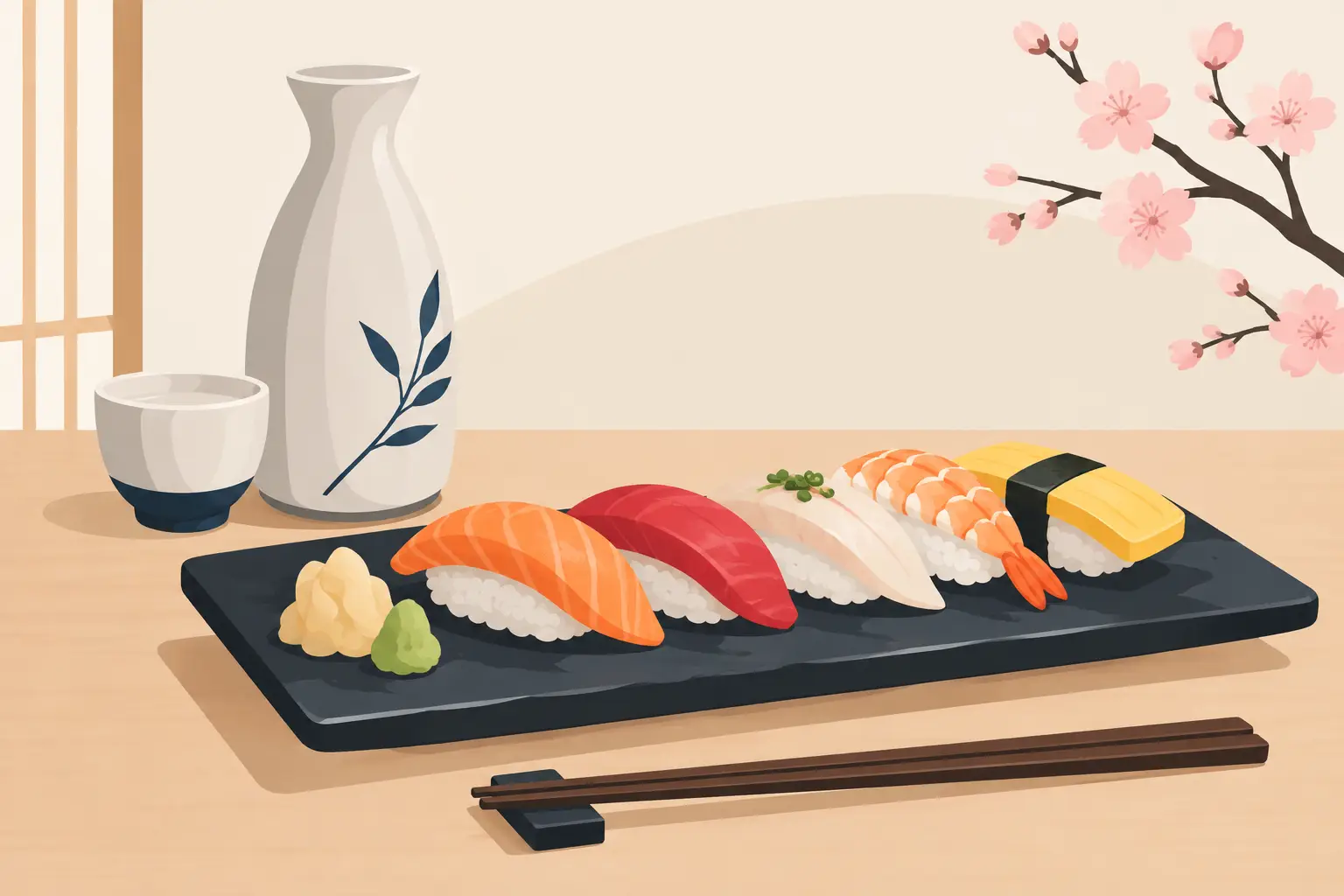
A great nigiri pairing does not need to be formal or complicated. The best sake with nigiri is usually the bottle that lets the fish stay in focus: clean enough for delicate white fish, textured enough for rich tuna, and served at a temperature that supports the chef’s preparation rather than competing with it.
That matters most when the sushi changes from piece to piece. A bright, lean fish may arrive with a touch of citrus or salt. The next bite could be lightly brushed with soy, followed by a fatty cut of tuna or a sweet shrimp. One sake can work beautifully across an omakase course, but the best match often depends on the fish in front of you and the way it has been seasoned.
Start With the Fish, Not the Label
Sake labels can be useful, but they do not tell the whole story. Rice polishing, brewing method, alcohol level, sweetness, acidity, and serving temperature all affect what you taste. A delicate sake may seem crisp and floral, while another may bring steamed rice, nuts, yogurt-like depth, or a fuller savory finish.
For nigiri, think about three things: richness, texture, and seasoning. Lean fish often benefits from lift and freshness. Fatty fish needs enough acidity or structure to reset the palate. Fish with a soft, creamy texture can handle a sake with more body and umami.
The chef’s seasoning is equally important. If a piece is served with salt and yuzu, a fragrant sake can be lovely. If it is brushed with nikiri, the lightly sweet soy glaze used on sushi, a dry sake with savory depth often feels more balanced. Adding extra soy sauce to every piece can make both the fish and the pairing harder to read.
Best Sake With Nigiri by Fish Style
Delicate white fish: choose crisp and precise
Sea bream, fluke, halibut, and other clean-tasting white fish call for a sake that feels light on its feet. Look for a dry ginjo or a restrained junmai ginjo, ideally served chilled. These styles often bring gentle fruit, fresh herbs, or a clean mineral finish that complements the fish without burying its subtle sweetness.
A very aromatic sake can be excellent with white fish, but there is a trade-off. If the nose is intensely melon-like or tropical, it may become the main event. When the fish is exceptionally delicate, a quieter, drier pour is usually the safer choice.
Silver-skinned fish: use acidity and freshness
Mackerel, sardine, aji, and kohada have more oil and a more pronounced character than mild white fish. Their richness asks for a sake with a clear line of acidity, a dry finish, or both. A classic junmai, served lightly chilled or closer to room temperature, can work especially well.
This is also where sparkling sake deserves consideration. Fine bubbles can refresh the palate after an oily bite, particularly when the fish is paired with ginger, scallion, or vinegar-forward rice. Choose a dry sparkling style rather than one that drinks like a sweet aperitif.
Salmon and richer farmed fish: favor balance over perfume
Salmon has a supple, rich texture and a familiar sweetness. A medium-bodied junmai ginjo is often a natural match because it has enough roundness to meet the fish while retaining a clean finish. Chilled sake works well here, especially for salmon served simply.
If the salmon comes with a creamy sauce, spicy seasoning, or heavy garnish, a more aromatic sake is not always the answer. The pairing may become sweet and soft all at once. A drier junmai with good acidity can bring more definition to the bite.
Bluefin tuna: match the cut, not just the fish
Tuna is not one pairing. Akami, the lean red meat, is clean and deeply savory; chutoro has more marbling; otoro is lush, silky, and rich. Treating all three pieces the same misses what makes a well-built tuna progression so memorable.
For akami, try a dry junmai or a savory, rice-forward sake. The umami in the sake can echo the tuna’s depth without overwhelming its clean finish. Chutoro often shines with a fuller junmai ginjo, one that has texture but still enough freshness to clear the palate.
Otoro can stand up to more structure. A traditional kimoto or yamahai sake, which often carries higher acidity and a deeper savory profile, can be an excellent match. Served slightly warmer than refrigerator cold, it may feel more expansive and less sharp, while cutting through the fat in each bite.
At UO NIGIRI, whole wild Bluefin tuna is prepared in house, so the character of each cut can be experienced on its own terms. If a chef presents a sequence of tuna nigiri, it is worth asking whether your sake should stay chilled throughout or warm slightly as the richer pieces arrive.
Sweet shellfish and shrimp: keep the finish clean
Amaebi, scallop, and other sweet shellfish benefit from sake that respects their natural sweetness without making the pairing cloying. A clean junmai ginjo or dry daiginjo can work well, particularly when chilled. Look for brightness and a finish that disappears rather than lingering with sugar.
For scallop with a little citrus or salt, a lightly fragrant sake can be beautiful. For cooked shrimp or eel, which bring more sweetness and sauce, move toward a sake with more acidity and savory backbone. A dry junmai served cool or gently warmed is often more useful than a highly floral pour.
Uni and roe: choose umami, not excess sweetness
Uni is creamy, oceanic, and sweet, while ikura carries salinity and richness. Both can be extraordinary with sake, but these are not the moments for a thin, neutral bottle. A rounded junmai, a mellow kimoto, or a sake with a subtle lactic character can meet their umami and make the finish feel more complete.
The exception is when the uni is especially light and sweet. Then a refined ginjo may offer enough contrast. As always, the freshness and specific origin of the ingredient matter more than a fixed rule.
Temperature Changes the Pairing
Many diners know sake as a cold drink, but temperature is one of the most useful tools in pairing it with sushi. Cold sake emphasizes crispness, fruit, and a clean finish. It is often the best starting point for white fish, shellfish, and lightly seasoned nigiri.
Cool or room-temperature sake reveals more rice character and texture. This can be rewarding with tuna, mackerel, uni, and fish brushed with soy. Gentle warmth softens the edges further and can highlight savory depth, making it particularly good with fatty cuts or more traditional, rice-forward styles.
There is no need to order several temperatures at once. If you are enjoying a full omakase, start chilled and ask to taste the same sake slightly warmer when the course moves into richer fish. That small adjustment can change the pairing more than switching to an entirely different bottle.
A Simple Way to Order Sake for Omakase
For most nigiri courses, one versatile sake is enough. Ask for a dry, medium-bodied junmai ginjo if the menu includes a broad range of fish. It is a dependable middle ground: fresh enough for lean pieces, rounded enough for salmon and tuna, and comfortable for diners who are still learning their sake preferences.
If your meal leans toward fatty tuna, uni, and richer seasonal selections, ask for a savory junmai or kimoto with noticeable acidity. If it centers on delicate white fish and shellfish, choose a clean, chilled ginjo. A knowledgeable server or sushi chef can guide the choice based on what is especially good that day.
Avoid thinking of premium sake as automatically better with every bite. Daiginjo can be elegant and expressive, but its perfume may distract from subtle fish. A modest, well-made junmai may create the more satisfying pairing because it leaves room for the rice, the seasoning, and the fish itself.
The most useful question is simple: tell your server whether you prefer crisp and light, savory and dry, or soft and aromatic. From there, let the day’s fish lead. The right sake should make you want another bite of nigiri, then another small sip - with neither one asking to be louder than the other.
MEDIA

SIGN UP OUR NEWSLETTER
 13354 Washington Blvd.,
Los Angeles, CA 90066
Lunch: Temporarily Closed
Dinner: Mon - Sat 5:30 pm - 10:00 pm (Last Call 9:30 pm)
Sun Closed