Blog
Why Sushi Provenance Matters at the Counter
10.29.2026 | Blog
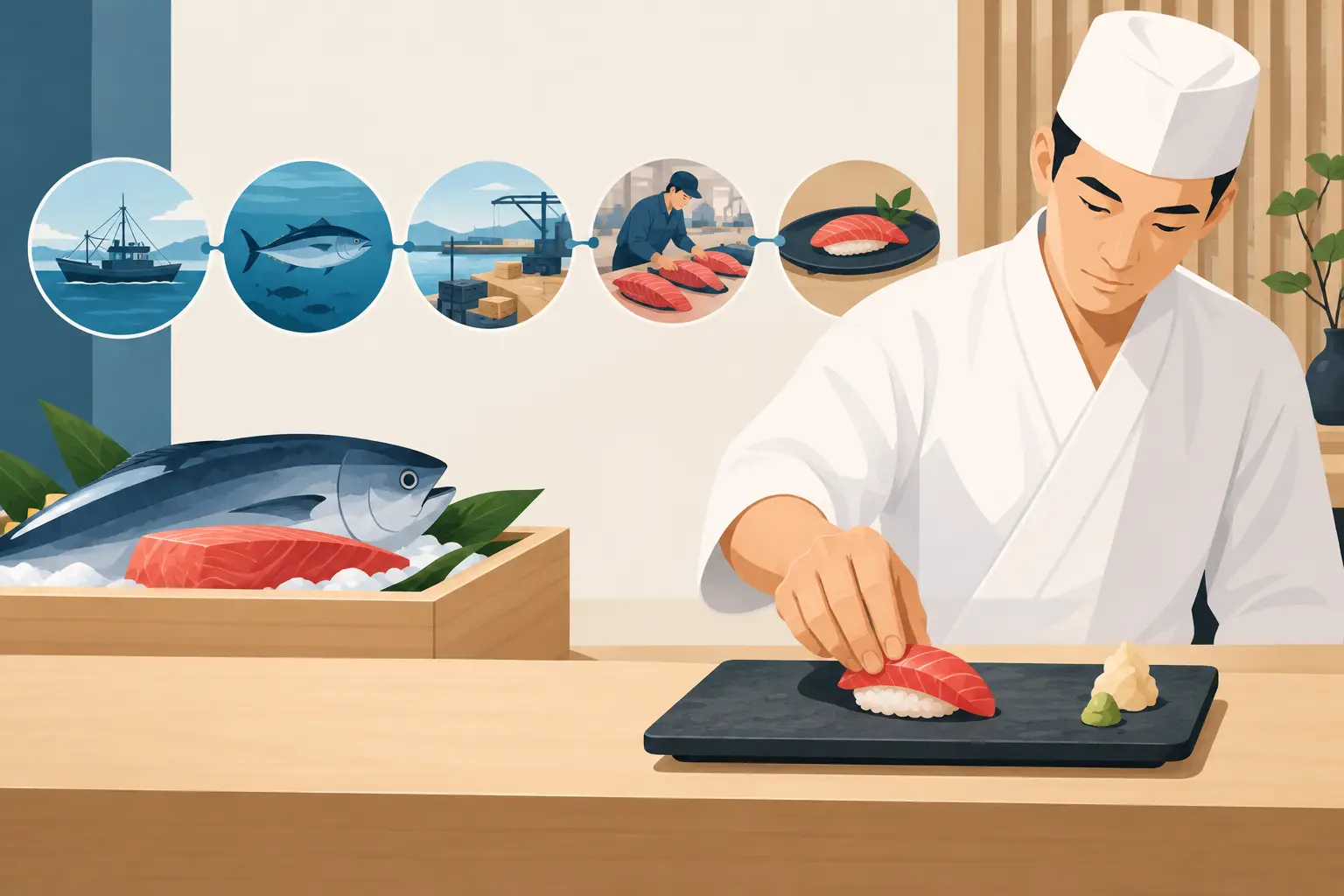
A piece of toro can look perfect under the counter lights and still leave a diner with an unanswered question: where did it come from? Sushi provenance is the story behind the fish - its species, origin, season, handling, and path to the chef’s knife. It is not a buzzword for a special occasion meal. It is one of the clearest ways to understand what makes sushi taste clean, balanced, and worth coming back for.
For diners, provenance turns a menu from a list of Japanese names into a conversation about flavor. For a sushi chef, it is the daily work behind every piece of nigiri: knowing which fish is at its best, how it should be prepared, and when to say no to a product that does not meet the standard.
What Sushi Provenance Really Means
Provenance begins with geography, but it does not end there. “From Japan” or “from California” is useful context, yet it says little on its own. A meaningful account of a fish includes the waters it came from, whether it was wild or farm-raised, how and when it was harvested, how it was transported, and how it was handled after arrival.
The species matters just as much. Japanese names can cover fish that vary widely by region and season. Aji, or horse mackerel, may be bright and lightly oily in one season, then richer and more assertive in another. Uni can reflect the kelp-rich waters where sea urchin fed. Even a familiar fish such as yellowtail can have a very different texture and fat content depending on its source and time of year.
Good provenance is not about making every piece sound rare. It is about being specific enough to make a smart decision. Some fish shine because they are local and landed close by. Others are worth bringing in because a particular market, fishery, or seasonal catch offers a quality that cannot be substituted.
Why the Source Changes the Bite
Freshness is often described as speed, but it is more accurately a chain of decisions. A fish can travel a long distance and arrive in excellent condition when it is harvested, chilled, packed, transported, and received with care. A fish caught nearby can lose its appeal quickly if that chain breaks down.
That is why experienced sourcing goes beyond asking when the fish arrived. The chef considers condition: the clarity of the eyes on a whole fish, the firmness of the flesh, the aroma, the temperature it has held, and how it responds to preparation. Those details affect whether a piece of white fish feels delicate and sweet or watery and flat.
Fatty fish make the difference especially easy to taste. Wild Bluefin tuna, when properly selected and prepared, offers layers of flavor rather than simple richness. Its lean akami, medium-fat chutoro, and richly marbled otoro each require attention to grain, temperature, and cutting. Buying whole fish creates the opportunity to evaluate and use each section according to its character instead of treating tuna as a uniform product.
Seasonal Fish Is Not a Gimmick
Seasonality gives an omakase meal its sense of movement. The best selection is not always the same selection, and that is the point. A chef-led meal should respond to what is tasting exceptional now, not force the same lineup every week because it is familiar.
This can mean brighter, leaner fish when the weather calls for it, or fuller-bodied, more savory selections later in the year. It can also mean choosing a lesser-known fish over a more famous one. A rare variety is not automatically better, but an unfamiliar fish at its peak can be more memorable than a standard favorite that is merely available.
For diners, this is one of the pleasures of omakase. You do not have to arrive knowing every fish by name. You only need curiosity and a willingness to let the chef guide the meal. A good counter makes that guidance comfortable, whether you are celebrating a birthday, planning a date night, or simply craving sushi on a Tuesday.
Wild, Farm-Raised, Local, and Imported: The Honest Trade-Offs
Sushi provenance should encourage better questions, not simplistic rules. Wild fish is often prized for its natural diet, seasonal variation, and firmer texture, but wild does not automatically mean superior. Availability can be inconsistent, and quality still depends on responsible harvesting and careful handling.
Farm-raised fish can offer reliable supply and a controlled product, particularly for certain species. Its quality depends on the farm’s practices, feed, environment, and harvest methods. The right farm-raised fish may be an excellent choice; the right wild fish may be extraordinary. The useful question is not which label sounds better, but whether the chef knows the product well enough to serve it at its best.
The same goes for local versus imported. Southern California has exceptional seafood, and using regional catch can offer a direct connection to nearby waters. Yet Japanese sushi also has a long tradition of seeking the best fish from different coasts and markets. A fish sourced through Tokyo’s Toyosu Market may offer a seasonal specialty or preparation standard that is difficult to find elsewhere. New Zealand, the East Coast, and the West Coast each bring different strengths to the case.
The Fishmonger Relationship Behind Better Sushi
The most useful provenance begins before a fish reaches the restaurant. A close relationship with fishmongers gives a chef access to information that a generic order sheet cannot provide: what came in that morning, what is peaking, what should rest another day, and what should be passed over.
At UO NIGIRI, owner-chef Yusuke Irie draws on decades of fish wholesale and culinary experience to source from Toyosu Market, New Zealand, and both U.S. coasts. That direct fishmonger perspective matters because selection is paired with in-house preparation. Fish is not simply received, sliced, and served. It is assessed, broken down, trimmed, and prepared according to the needs of that particular catch.
This work is often invisible at the table, which is exactly how it should be. The guest should notice the result: a clean finish, a precise texture, rice that supports rather than overwhelms the fish, and a course that feels thoughtfully paced. But the quiet confidence of a great piece of nigiri comes from many decisions made long before it reaches the plate.
How to Read Provenance Without Turning Dinner Into Homework
You do not need to interrogate every server or memorize fishing regions to appreciate where sushi comes from. Start with a few natural questions. Ask what is especially good that day, whether there is a seasonal fish the chef is excited about, or how a lesser-known selection tastes. A welcoming sushi restaurant should be happy to answer in plain language.
Pay attention to how the menu changes, too. A restaurant that treats sourcing seriously may not offer every fish every day. That can be mildly disappointing if you arrived with one particular craving, but it is generally a better sign than a case that never changes regardless of season or supply.
Provenance should also make diners more confident, not more anxious. The goal is not to chase the most expensive name on the menu. A carefully chosen piece of kohada, sayori, or aji can be every bit as revealing as premium tuna because it shows whether the chef understands curing, knife work, temperature, and balance.
A Better Question to Bring to the Sushi Bar
Instead of asking only, “What is the best fish?” try asking, “What is tasting best today?” The answer may be a favorite, a surprise, or a fish you have never ordered before. That is where sushi provenance becomes personal: not a claim printed on a menu, but a reason to trust the person placing the next piece of nigiri in front of you.
The next time you sit down for sushi, let the origin story guide your choice without taking over the meal. The best outcome is simple - a fish selected with care, prepared with skill, and enjoyed while it is exactly where it should be: on your plate.
MEDIA

SIGN UP OUR NEWSLETTER
 13354 Washington Blvd.,
Los Angeles, CA 90066
Lunch: Temporarily Closed
Dinner: Mon - Sat 5:30 pm - 10:00 pm (Last Call 9:30 pm)
Sun Closed