Blog
A Guide to Tuna Cuts for Better Sushi Orders
08.26.2026 | Blog
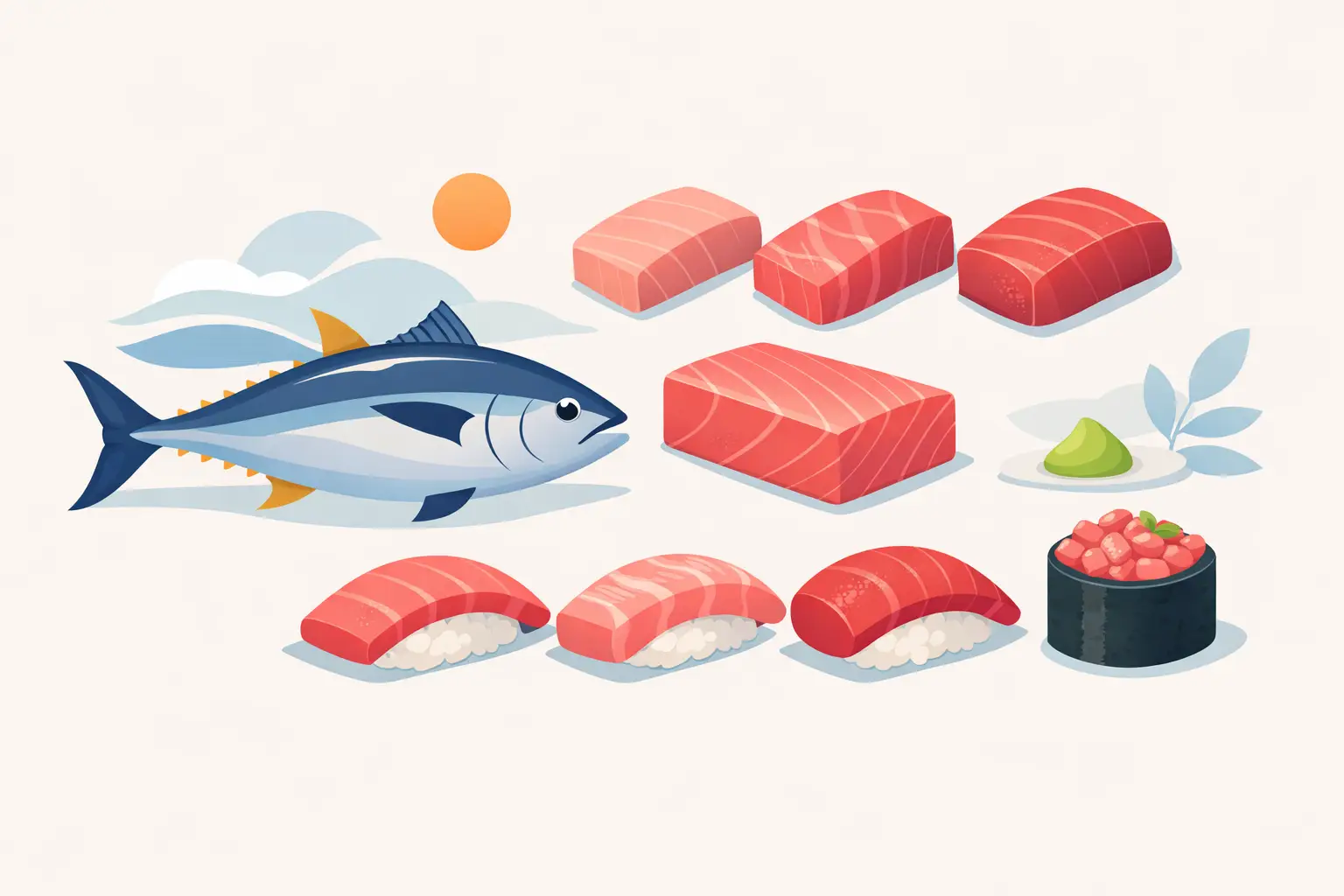
The first piece of tuna can set the rhythm of an omakase meal. It may be clean and lean, deeply savory, buttery, or almost melting before you have time to notice its texture. This guide to tuna cuts explains why those differences exist and how to order with more confidence, whether you are trying Bluefin for the first time or already know you love toro.
Tuna is not one uniform ingredient. A fish contains muscles that work differently, carry different amounts of fat, and sit in different places along the body. Skilled sushi chefs use those distinctions rather than treating every slice as the same. The result is a progression of flavor that can move from bright and mineral to rich and luxurious, often within a few pieces of nigiri.
A Guide to Tuna Cuts Starts With the Fish
While several tuna species appear on sushi menus, Bluefin is especially prized for its range of cuts. Its size and natural fat distribution give chefs access to lean red meat as well as the highly marbled belly cuts known as toro. When a restaurant purchases whole, wild Bluefin tuna and breaks it down in-house, the chef can assess each section and serve it at its best.
That process matters because tuna quality is more than a label. Season, water temperature, the fish's diet, handling after landing, aging, and knife work all affect the final piece. A beautiful name cannot make up for poor handling, while carefully sourced tuna can make even a lean cut feel memorable.
At UO NIGIRI, owner-chef Yusuke Irie's fish wholesale background informs that work from the start. Direct sourcing and in-house preparation make it possible to treat a whole fish as a collection of distinct expressions, not simply a supply of identical tuna slices.
The Main Tuna Cuts You Will See in Sushi
Akami: clean, lean, and deeply savory
Akami is the lean red meat from the sides and back of the tuna. It is often what diners picture when they think of classic tuna nigiri: ruby red, firm but tender, and clean on the palate. Its flavor is more savory and mineral than fatty, with an elegant finish that lets the quality of the fish speak clearly.
Because akami has less fat, it rewards precise preparation. A chef may cut it slightly thicker than a rich belly piece, score it subtly, or season it with a light brush of soy sauce. In traditional sushi sequences, akami often arrives earlier, before richer fish can coat the palate.
If you tend to prefer yellowtail over salmon because you like a cleaner bite, akami may be your favorite tuna cut. It also pairs especially well with warm sushi rice, whose gentle acidity lifts the fish's natural savoriness.
Chutoro: the middle ground
Chutoro means medium-fatty tuna. It comes from the belly area, generally closer to the center of the fish than the leaner sections but not from the richest portion. It has more softness and marbling than akami, yet still keeps a recognizable tuna flavor.
For many diners, chutoro is the most balanced cut. You get the silky texture associated with toro without the full richness of otoro. That makes it a good choice for a second or third piece of tuna, and an approachable place to start for guests who are curious about fatty tuna but do not usually seek out very rich fish.
Chutoro is also a reminder that sushi is seasonal. One fish may yield a cut with delicate, restrained marbling; another may be exceptionally rich. Rather than expecting every piece to look identical, enjoy those variations as evidence that the fish is being evaluated individually.
Otoro: the richest tuna belly
Otoro is the most prized fatty belly portion, usually found near the lower belly toward the head of the fish. Its pale pink color and visible marbling signal an exceptionally tender texture. At the right temperature, otoro begins to soften almost immediately on the tongue, carrying a sweet, rich flavor that feels closer to fine beef than to lean fish.
That richness is exactly why portion size and timing matter. Otoro can be extraordinary, but it is not always the best first bite in a meal. Served after lighter fish, it feels like a high point. Served too early or in too many consecutive pieces, it can overwhelm more delicate flavors.
A good chef considers the specific fish before deciding how to serve otoro. It may be offered simply as nigiri, lightly brushed with soy, or given a brief touch of heat to render some surface fat. There is no single best treatment. The goal is to show the cut's character without burying it.
Kama-toro and other prized sections
Kama-toro comes from the collar area near the tuna's head. This section works hard and can have a striking combination of fat, texture, and concentrated flavor. It is less common than standard belly cuts, which is part of its appeal, but rarity alone is not the point. Proper trimming and slicing are essential because the muscle structure differs from softer belly meat.
You may also encounter cuts described by their exact location or preparation rather than a familiar menu name. A chef might serve a particularly good piece from near the spine, a hand-chopped tuna tartare, or a lightly seared slice to emphasize its fat. These offerings are an opportunity to try tuna beyond the usual akami-toro shorthand.
Why Color Does Not Tell the Whole Story
Many diners use color as a quick measure of freshness, but tuna is more complicated than bright red equals better. The shade can vary by species, cut, oxygen exposure, and aging. Akami is typically darker red, while fatty toro appears lighter because of its marbling. Neither is automatically superior.
Texture offers better clues once the fish reaches the counter. Lean tuna should feel supple, not dry or stringy. Fatty tuna should be soft without becoming mushy. The rice should support the fish rather than compress it, and the temperature should feel intentional. Cold fish can mute aroma and make fat seem waxy, while properly tempered tuna opens up as it is served.
Seasoning matters, too. Sushi is not plain fish placed on rice by accident. A chef may use nikiri, a lightly sweetened and reduced soy-based glaze, a tiny amount of wasabi, salt, or citrus to bring a specific cut into balance. Before adding soy sauce, taste the piece as served. You may find that it already has exactly what it needs.
How to Order Tuna With More Confidence
If you are ordering à la carte, start by thinking about the kind of bite you want. Choose akami for clean, classic tuna flavor. Choose chutoro for a balance of flavor and richness. Choose otoro when you want the most indulgent, melting texture. If a rare or collar cut is available, ask how it compares with those three familiar options and let the chef guide you.
At omakase, the better approach is often to stay open to the sequence. The chef can place lean tuna before fatty tuna, select a cut based on that day's fish, and adjust the treatment to match its condition. That is especially valuable when the menu changes with market availability. A specific cut may not be offered every day, and that is a strength, not a limitation.
For diners who are unsure about raw fish, akami can be an easy entry point because it tastes unmistakably like tuna rather than primarily like fat. For celebratory meals and date nights, a progression from akami to chutoro to otoro gives the table a shared tasting experience without requiring a formal, intimidating setting.
Let the Cut Set the Pace
The best way to enjoy tuna nigiri is one piece at a time. Pick it up gently, turn it fish-side down if you use soy sauce, and use only a small touch. Eat it soon after it is served, when the rice is warm and the tuna is at the temperature the chef intended.
If a piece surprises you, ask about it. Was it lean tuna from the back? Medium-fatty belly? A collar cut? Those questions make a meal more personal, and a thoughtful sushi counter should welcome them. Your next favorite piece may not be the most famous cut, but the one that meets your appetite on that particular night.
MEDIA

SIGN UP OUR NEWSLETTER
 13354 Washington Blvd.,
Los Angeles, CA 90066
Lunch: Temporarily Closed
Dinner: Mon - Sat 5:30 pm - 10:00 pm (Last Call 9:30 pm)
Sun Closed