Blog
Wild Versus Farmed Tuna: What Sushi Diners Taste
08.30.2026 | Blog
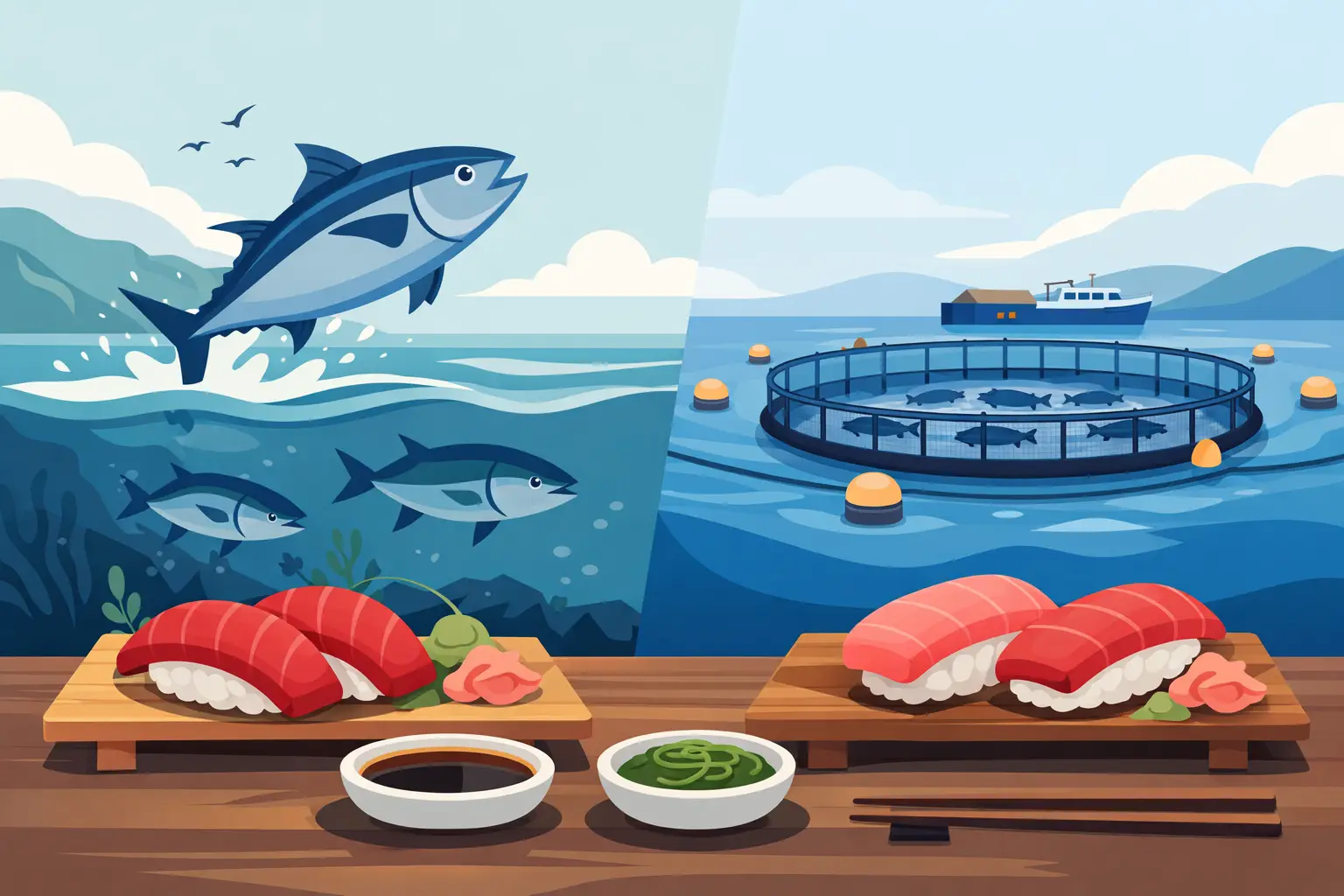
A piece of tuna can look almost identical across a sushi counter: ruby red, neatly cut, lightly brushed with soy. But the first bite can tell a different story. When comparing wild versus farmed tuna, diners are really comparing much more than a label. They are tasting the effects of species, diet, season, handling, fat content, and the care taken between the boat and the chef’s knife.
For sushi, there is no single answer that makes one category automatically better. A well-sourced farmed fish can be rich and satisfying. An expertly handled wild fish can be clean, complex, and unforgettable. What matters most is whether the tuna was selected for its particular strengths and prepared accordingly.
Wild Versus Farmed Tuna Starts With the Fish
“Wild” means the tuna lived and fed in its natural ocean environment before being caught. Its diet changes with the waters it travels, the season, and the available prey. That movement and variation often create a more distinct flavor profile, with texture and fat levels that can differ from fish to fish.
“Farmed” can describe several different production methods. Some tuna are raised from juvenile fish in ocean pens, while others are captured young and then fed in pens until they reach a desired size and fat level. This latter method is often called ranching. The details matter because species, feed, farming conditions, and harvest practices all influence the finished fish.
Bluefin is the tuna most diners associate with luxurious sushi, especially when they see akami, chutoro, and otoro on a menu. Yet bluefin is not one uniform experience. A lean wild bluefin loin and a deeply marbled farmed bluefin belly may both be excellent, but they offer very different pleasures at the counter.
Flavor: Clean, Rich, and Sometimes Surprising
Wild tuna is often prized for a flavor that feels more ocean-driven and layered. In a good piece of wild bluefin, the lean red meat can have a clear mineral quality, gentle sweetness, and a satisfying savory finish. Its fat is often more variable, which is part of what makes seasonal wild fish interesting. The chef must pay attention to each individual fish rather than expecting every cut to behave the same way.
Farmed tuna is frequently valued for consistency. Controlled feeding can produce abundant, even marbling, particularly in bluefin. For guests who love a soft, buttery piece of otoro, farmed fish may offer that plush texture more reliably throughout the year.
Neither style should be judged by color alone. Bright red tuna is not necessarily fresher, more natural, or better. Color can be influenced by species, handling, temperature, and packaging practices. The more meaningful questions are whether the fish smells clean, has been handled carefully, and tastes balanced in the style it is being served.
Texture Depends on More Than Fat
Fat gets the most attention in tuna, but texture is where a chef’s skill becomes especially visible. Wild tuna may have a firmer, more structured bite because of its active life in open water. When sliced properly, that texture can feel elegant rather than chewy, giving the rice and fish equal presence in nigiri.
Farmed tuna, especially fatty cuts, can be softer and more yielding. This can be wonderful in a small piece of nigiri, where the fat begins to melt at body temperature. It can also become heavy if the portion is too large or if the fish is served too cold.
A thoughtful sushi course uses these differences rather than forcing every tuna cut into the same presentation. Lean akami may be lightly seasoned to bring out its umami. Chutoro may be cut a little thicker to show its balance of meat and fat. Otoro may need a smaller portion, warmer serving temperature, or a touch of acidity to keep the bite lively.
Why Season Matters So Much
Tuna changes throughout the year. Wild fish may build fat before long migrations or after feeding in productive waters, while its lean meat may be especially compelling in another season. The best choice is not always the fattiest fish. Sometimes a clean, finely textured akami is exactly what a meal needs.
This is one reason seasonal sushi feels different from a fixed menu. The chef is responding to the fish that is best now, not simply repeating the same selection because it is familiar.
Sourcing and Handling Are the Bigger Quality Test
The wild versus farmed tuna conversation can become too simple when it overlooks the supply chain. A wild tuna that has been poorly handled, held too long, or shipped without proper temperature control will not become special just because it was caught in the ocean. Likewise, responsibly raised tuna that is harvested and processed with care can provide a beautiful sushi experience.
For raw fish, the journey after harvest is crucial. The tuna must be chilled quickly, processed cleanly, stored at the right temperature, and evaluated closely when it arrives. Skilled chefs also consider how the fish has aged. Freshness is not always about serving fish immediately. Depending on the species and cut, controlled aging can soften texture, develop umami, and make the fish more expressive.
Buying whole tuna gives a sushi chef another level of control. The chef can inspect the fish, understand its fat distribution, and use different sections according to their character. A shoulder cut, belly cut, or lean center loin may all deserve different treatment. It also allows for a more respectful use of the fish, including cuts that do not often appear on standard sushi menus.
At UO NIGIRI, owner-chef Yusuke Irie draws on a fish-wholesale background to select whole wild bluefin tuna and market-fresh seafood from sources including Tokyo’s Toyosu Market, New Zealand, and the American coasts. That direct attention to purchasing and preparation is what helps turn a tuna label into a memorable piece of sushi.
Sustainability Is Not a One-Word Answer
Many diners understandably ask whether farmed tuna is automatically the more sustainable choice. The honest answer is that it depends. Tuna populations vary by species and region. Fishing methods vary in their impact. Farming operations also differ in feed sources, stocking conditions, waste management, and reliance on wild-caught fish for juvenile stock or feed.
A broad label cannot replace informed sourcing. For wild tuna, responsible management, legal catch methods, traceability, and species status matter. For farmed tuna, the operation’s environmental practices and transparency matter. Chefs and fish buyers should be able to ask where a fish came from, how it was raised or caught, and how it was handled.
For diners, it is reasonable to be curious without expecting a perfect slogan. Choosing sushi from restaurants that take procurement seriously supports a better standard: buy carefully, serve seasonally, and avoid treating premium fish as interchangeable.
Which Tuna Is Better for Sushi?
The best tuna is the one that is excellent on that particular day and suits the experience the chef wants to create. Wild tuna often appeals to diners who enjoy nuance, seasonality, and a leaner, more energetic bite. Farmed tuna can be a strong choice for diners seeking lush marbling and dependable richness.
A well-paced omakase may include both ideas over time: a clean lean tuna to sharpen the palate, followed by a richer cut that feels indulgent without overwhelming the meal. The goal is not to declare a winner. It is to recognize that tuna has range.
When you sit down for sushi, ask what is in season, which cut the chef is excited about, and how it is being served. Those questions lead past the label and toward the part that matters most: a piece of fish chosen with care, seasoned with restraint, and served at the moment it tastes its best.
MEDIA

SIGN UP OUR NEWSLETTER
 13354 Washington Blvd.,
Los Angeles, CA 90066
Lunch: Temporarily Closed
Dinner: Mon - Sat 5:30 pm - 10:00 pm (Last Call 9:30 pm)
Sun Closed