Blog
Japanese Seafood Favorites Worth Ordering in LA
10.25.2026 | Blog
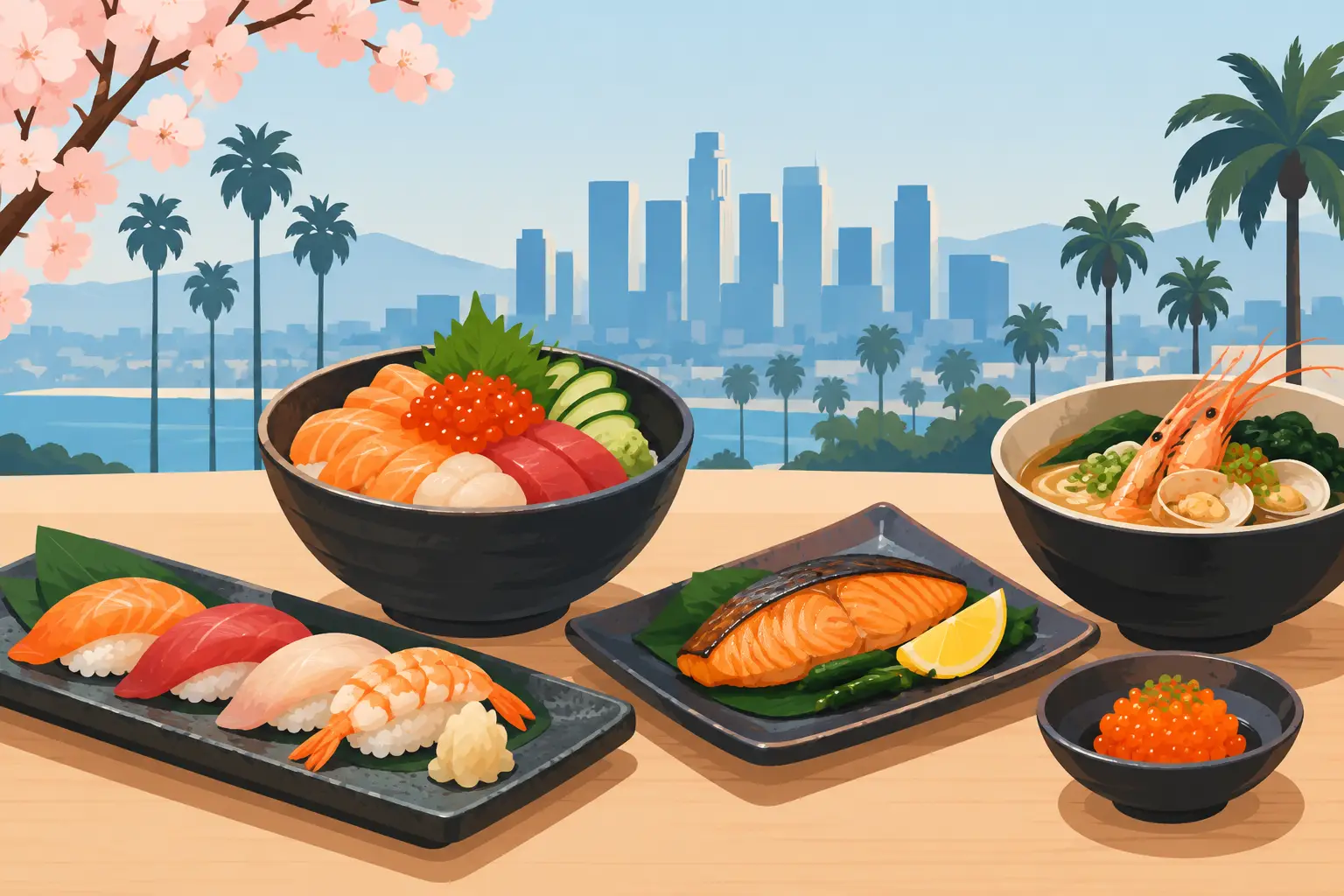
A great sushi meal can begin with salmon or tuna, but the most memorable Japanese seafood favorites usually arrive when you let the fish set the direction. One piece may be clean and lean, another rich and buttery, another gently cured or brushed with a warm sauce. That contrast is the pleasure of a chef-selected meal: it gives familiar cravings a little more range without making dinner feel like a test.
For diners in Marina Del Rey and across the Westside, understanding a few seafood names makes the omakase experience even more rewarding. You do not need to know every Japanese term. It helps simply to notice how each fish is sourced, prepared, and served in its best season.
Japanese Seafood Favorites Start With the Fish
Sushi is often described by its rice, and the rice matters. But seafood determines the character of each course. A chef considers fat content, texture, temperature, and the way a fish changes from one season to the next. The same fish may be served plain one week, lightly seared the next, or paired with a sharper accent when its flavor calls for it.
Sourcing is part of that decision. Fish from Tokyo's Toyosu Market can bring Japanese seasonal specialties to Los Angeles, while fish from New Zealand and the East and West Coasts offers a different calendar of excellent choices. The goal is not to serve an impressive name for its own sake. It is to serve a piece when it has the clarity, texture, and condition it deserves.
That is also why a thoughtful sushi menu will not look identical every day. Weather, catch conditions, and market availability change. A fixed list can be comforting, but a seasonal selection gives the chef room to choose what is truly eating well now.
Bluefin tuna: more than one experience
Bluefin is often the first fish people associate with serious sushi, yet "tuna" barely tells the full story. Akami is the lean red meat, clean and savory with a firm but tender bite. Chutoro comes from the medium-fat section and brings a softer texture with a richer finish. Otoro, the fattiest cut, is lush and delicate, with a flavor that lingers.
These cuts are related, but they should not be treated as interchangeable. Akami can be especially satisfying when you want a pure, focused piece of fish. Chutoro balances richness and structure. Otoro is an occasion in itself, best enjoyed slowly rather than rushed between stronger flavors.
Purchasing whole, wild Bluefin tuna gives a sushi team greater control over those distinctions. It allows the fish to be broken down in-house and evaluated cut by cut, instead of relying only on pre-portioned pieces. Proper handling matters as much as the species: the way tuna is trimmed, rested, and sliced shapes what reaches the rice.
Salmon, yellowtail, and the familiar favorites
Salmon remains a favorite because it is approachable, silky, and naturally rich. Its mild sweetness works beautifully as nigiri, but quality makes a clear difference. A well-handled piece should taste clean and fresh, not overly oily or heavy.
Yellowtail, often called hamachi, has a firmer texture and a gentle richness that sits between salmon and fatty tuna. Depending on the season and where it is sourced, it can show a bright, almost crisp finish. It is an easy next choice for a diner who usually orders salmon but wants something with a little more depth.
There is no need to move past familiar fish to prove anything. The best way to order is to begin with what you enjoy, then ask for one or two pieces that share a similar quality. If you like the richness of salmon, medium-fat tuna or yellowtail may be a natural next step. If you prefer a lighter bite, a white fish or shellfish can open up another side of sushi.
Seasonal Fish Makes Omakase Feel Personal
Seasonality is not just a phrase on a menu. It is a practical way to serve seafood at its best. Some fish become fattier in colder months. Others are prized when their flavor is especially sweet, delicate, or clean. A chef who follows the market can build a progression that moves from subtle to rich, with each piece preparing your palate for the next.
White fish is where this approach can be especially revealing. Depending on availability, a chef may serve sea bream, fluke, or another seasonal selection with a light garnish or a touch of citrus. These fish are understated compared with Bluefin, but that is their appeal. Their texture is often precise and their flavor rewards attention.
Silver-skinned fish such as mackerel offer a completely different experience. They can be savory, assertive, and lightly cured to balance their natural oils. For some diners, mackerel becomes an instant favorite; for others, it is an acquired taste. Both reactions are fair. A good omakase meal makes room for discovery without insisting that every guest should like every piece.
Shellfish and roe add still more contrast. Scallop can be sweet and tender. Uni, or sea urchin, can range from briny and oceanic to deeply creamy, depending on its origin and season. Ikura, salmon roe, brings bright salinity and a soft pop. These are not merely decorative additions. They change the pace of a sushi course and show how broad Japanese seafood can be.
Why preparation should stay restrained
Exceptional fish does not need to be hidden under heavy sauces. A small brush of nikiri, a pinch of salt, freshly grated ginger, citrus, or a bit of scallion may be enough. Those details are purposeful: they can sharpen sweetness, temper richness, or lift a delicate fish without covering it.
This restraint is also why soy sauce should be used with care. If nigiri has already been seasoned by the chef, adding more may overwhelm the balance. A small amount is fine when needed, especially with simpler pieces, but tasting the first bite as served lets you understand the intended flavor.
How to Order With Confidence
Omakase is a comfortable choice when you want guidance. Rather than trying to identify every fish in advance, tell the chef what you usually enjoy and mention any allergies or ingredients you avoid. A preference for richer fish, lighter fish, cooked items, or no shellfish gives useful direction without turning dinner into a complicated negotiation.
At UO NIGIRI, accessible omakase courses make that conversation easy for a casual weeknight, a date, or a celebration. Starting with a chef-selected course can introduce fish that may not appear on a standard neighborhood sushi menu, while still leaving room to add a favorite nigiri if you are craving one particular piece.
For the best progression, eat nigiri when it arrives. Sushi is timed around temperature and texture: cool fish, gently warm rice, and seasoning that has just been applied. Pick up the piece with your fingers or chopsticks, turn it fish-side down if dipping lightly in soy sauce, and enjoy it in one bite when possible. The rice is part of the composition, not a side dish to separate.
Pace matters, too. Start with lighter fish before moving toward fattier tuna, richer shellfish, or uni. Pickled ginger is useful as a palate cleanser between contrasting pieces, not as a topping for every bite. Water, tea, beer, sake, or a crisp wine can all work well, depending on what you enjoy and the flavors on the plate.
The Best Choice Is Often the One You Did Not Plan
A sushi dinner does not need to be reserved for a milestone or approached with a long list of rules. Ask what arrived from the market, choose one familiar favorite, and let the chef suggest a piece you have not tried. The next time a seasonal fish appears at the counter, take the invitation. Your new favorite may be the one that was not on your usual order.
MEDIA

SIGN UP OUR NEWSLETTER
 13354 Washington Blvd.,
Los Angeles, CA 90066
Lunch: Temporarily Closed
Dinner: Mon - Sat 5:30 pm - 10:00 pm (Last Call 9:30 pm)
Sun Closed