Blog
What Makes a Family Friendly Omakase Restaurant?
10.19.2026 | Blog
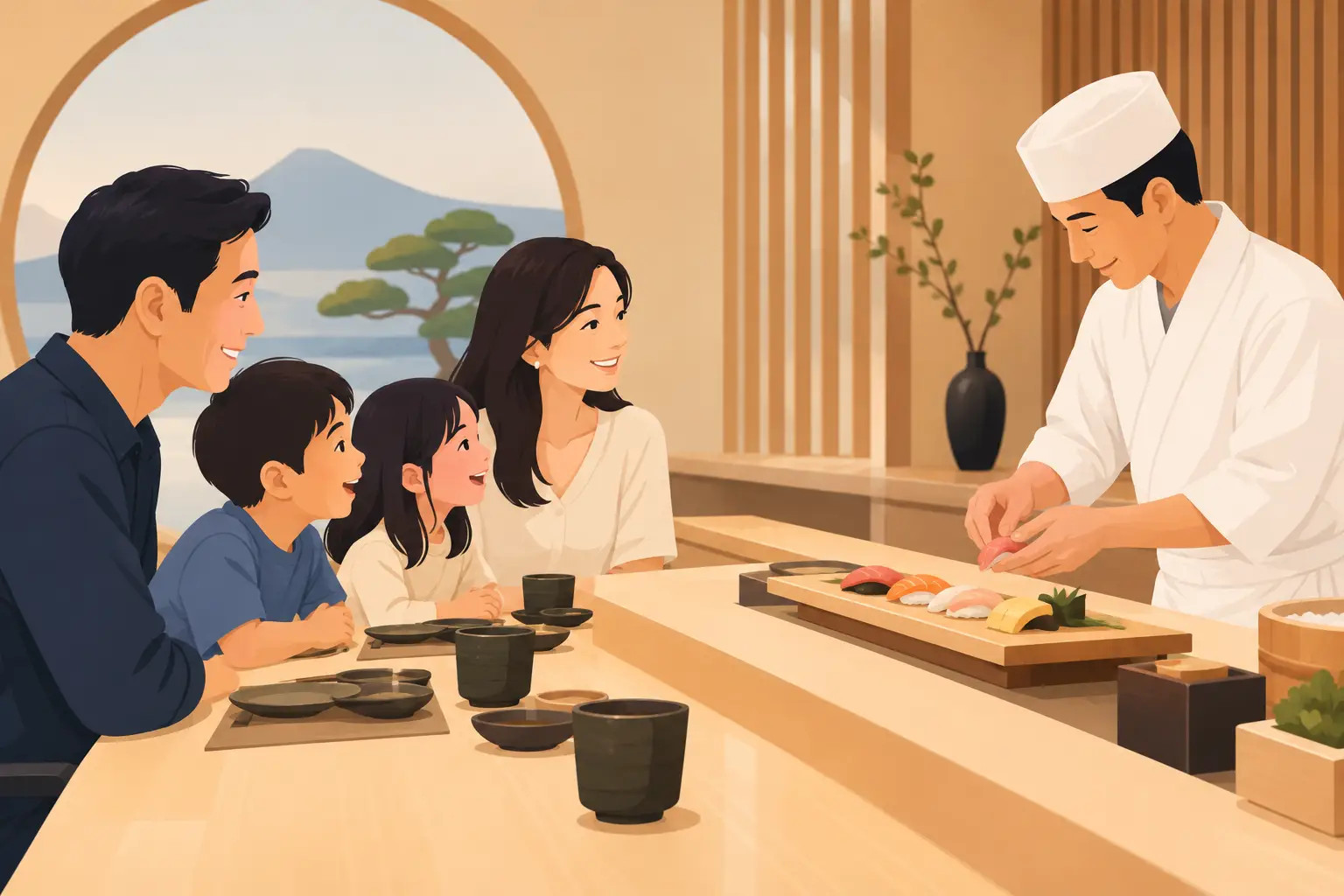
A family friendly omakase restaurant is not one that waters down the sushi or asks parents to apologize for bringing children. It is a place where the fish is treated seriously, the room feels comfortable, and everyone at the table can find a way into the meal. For a Westside family, that can mean a celebratory dinner with grandparents, a first taste of uni for a curious teenager, or simply a good weeknight meal that feels more special than the usual routine.
Omakase translates to “I leave it up to you.” That trust should feel inviting, not intimidating. The best version of the experience gives diners the chef’s point of view while making room for different appetites, ages, and comfort levels with raw fish.
Omakase should feel guided, not rigid
Traditional omakase is built around attention: the chef considers the fish at its best that day, the order of flavors, and the pace of the meal. Those details are part of what makes it memorable. But a family meal rarely follows one fixed script. One person may be eager for every seasonal selection, while another is happiest with salmon, tuna, and a warm cooked dish.
A welcoming restaurant understands that both guests belong at the same table. The goal is not to turn omakase into a generic sushi platter. It is to offer a thoughtful path through the meal, with enough flexibility that diners can relax.
That may mean choosing an accessible omakase course for the adults while ordering familiar nigiri or rolls for children. It may mean asking the server which selections are cooked, mild, or especially approachable. It may also mean sharing a few pieces so a guest can try something new without committing to a full order. These small choices let the meal stay personal.
For families with younger children, timing matters as much as the menu. A long, formal counter service can be wonderful for a planned date night, but it can be difficult after a busy school day. Casual omakase works best when the service is attentive without being ceremonial. Guests should be able to settle in, ask questions, and enjoy the meal at a natural pace.
What quality looks like for every guest
“Family friendly” should never be confused with lower standards. In sushi, quality begins well before a piece reaches the counter. The source of the fish, how it is transported, whether it is handled whole, and the care taken in preparation all shape its flavor and texture.
That is especially meaningful when a family is sharing a meal. Great fish has a clarity that often makes it more approachable: clean sweetness in scallop, rich but balanced Bluefin tuna, gentle texture in fluke, or the bright snap of a seasonal white fish. A child who thinks they do not like raw fish may respond very differently to one carefully prepared piece than to an anonymous, refrigerated roll.
Seasonality also gives families a reason to return. Sushi is not meant to taste exactly the same every month. Certain fish are at their best only for a short time, and a chef-led menu can introduce diners to those changes in an easy, low-pressure way. Familiar favorites provide a foundation, while a rare selection can become the surprising part of the evening that everyone talks about afterward.
Still, not every new fish will be the right fit for every guest. Parents know their children’s preferences, and experienced sushi diners have preferences of their own. A good team will describe the fish plainly rather than making anyone feel they need expert vocabulary to order well. Ask what is mild, what is richer, what has a firmer texture, or what can be served cooked. Those are useful questions, not signs that someone does not belong in an omakase restaurant.
The value of a clear starting point
Price can be another barrier when families consider omakase. High-end sushi counters often ask guests to commit to a lengthy, expensive menu before they know whether the experience suits the group. There is a place for that kind of dinner, but it is not the only way to enjoy chef-selected sushi.
An approachable course price changes the equation. It lets a couple bring a child along, plan a birthday dinner, or make a spontaneous reservation without treating the meal as a once-a-year event. It also makes repeat visits possible, which is one of the best ways to develop an appreciation for seasonal fish.
At UO NIGIRI, casual-style omakase begins at $38, with three course options designed to make chef-selected sushi feel within reach. The restaurant’s owner-chef, Yusuke Irie, brings decades of fish wholesale and culinary experience to sourcing from Tokyo’s Toyosu Market, New Zealand, and the East and West Coasts of the United States. That direct fishmonger perspective matters because freshness is not a slogan. It comes from knowing what to buy, when to buy it, and how to prepare it in-house.
How to plan a family omakase meal
A little planning helps the table feel easy from the first course. If someone has allergies or avoids certain ingredients, mention it when arranging the meal and remind the staff when you arrive. Raw seafood requires particular care for guests who are pregnant, immunocompromised, or have medical dietary restrictions. The restaurant can help identify suitable options, but individual medical guidance should come first.
For young diners, it is usually better to begin with familiar flavors rather than framing the meal as a challenge. Tuna, salmon, cooked shrimp, tamago, and rice can offer an easy starting point. From there, a single piece of a new fish is enough. Curiosity tends to go further when no one feels pressured to finish something they do not enjoy.
Families also benefit from ordering with the table in mind. An omakase course gives eager diners a progression of selections, while additional à la carte sushi can cover specific favorites. This mix works well for groups with different appetites. It keeps the chef’s seasonal perspective at the center of the meal without forcing every person into the same format.
Parents may worry that children will disrupt a sushi-focused dinner, but hospitality runs both ways. Choose a seating time that works for your family, keep expectations realistic, and let the staff know if you need a little help with pacing. In return, a relaxed restaurant should make children feel like guests rather than exceptions. A warm greeting, a clear explanation of the menu, and prompt service can make all the difference.
Questions worth asking at the table
The most enjoyable omakase meals are conversational. Ask what arrived most recently, which fish is in peak season, or how a particular piece was prepared. If you see a fish you do not recognize, ask about its flavor and texture before ordering. The answers add context to the meal and can make a first taste feel more meaningful.
It is also helpful to ask about the rice. Nigiri is not only about the fish on top. The temperature, seasoning, and texture of the rice should support the seafood rather than overwhelm it. Details like this are where a chef’s experience becomes visible, even in a casual setting.
For adults introducing children to sushi, the lesson does not need to be formal. Let them notice the color of the fish, the difference between lean tuna and fatty tuna, or the way wasabi changes a bite. Let them decide whether they want another piece. A family meal has room for both learning and simple enjoyment.
A restaurant for ordinary nights and big moments
The appeal of a family friendly omakase restaurant is not that it makes sushi less special. It makes special sushi more available. Families should be able to enjoy carefully sourced fish for a graduation, a visiting relative, a birthday, or a Tuesday when everyone finally has time to sit together.
The best table is one where a sushi enthusiast can find something rare, a cautious diner can order confidently, and a child can take a first proud bite of nigiri. When the fish is excellent and the welcome is genuine, that shared meal becomes its own reason to come back.
MEDIA

SIGN UP OUR NEWSLETTER
 13354 Washington Blvd.,
Los Angeles, CA 90066
Lunch: Temporarily Closed
Dinner: Mon - Sat 5:30 pm - 10:00 pm (Last Call 9:30 pm)
Sun Closed