Blog
Does Sushi Use Frozen Fish? The Honest Answer
10.03.2026 | Blog
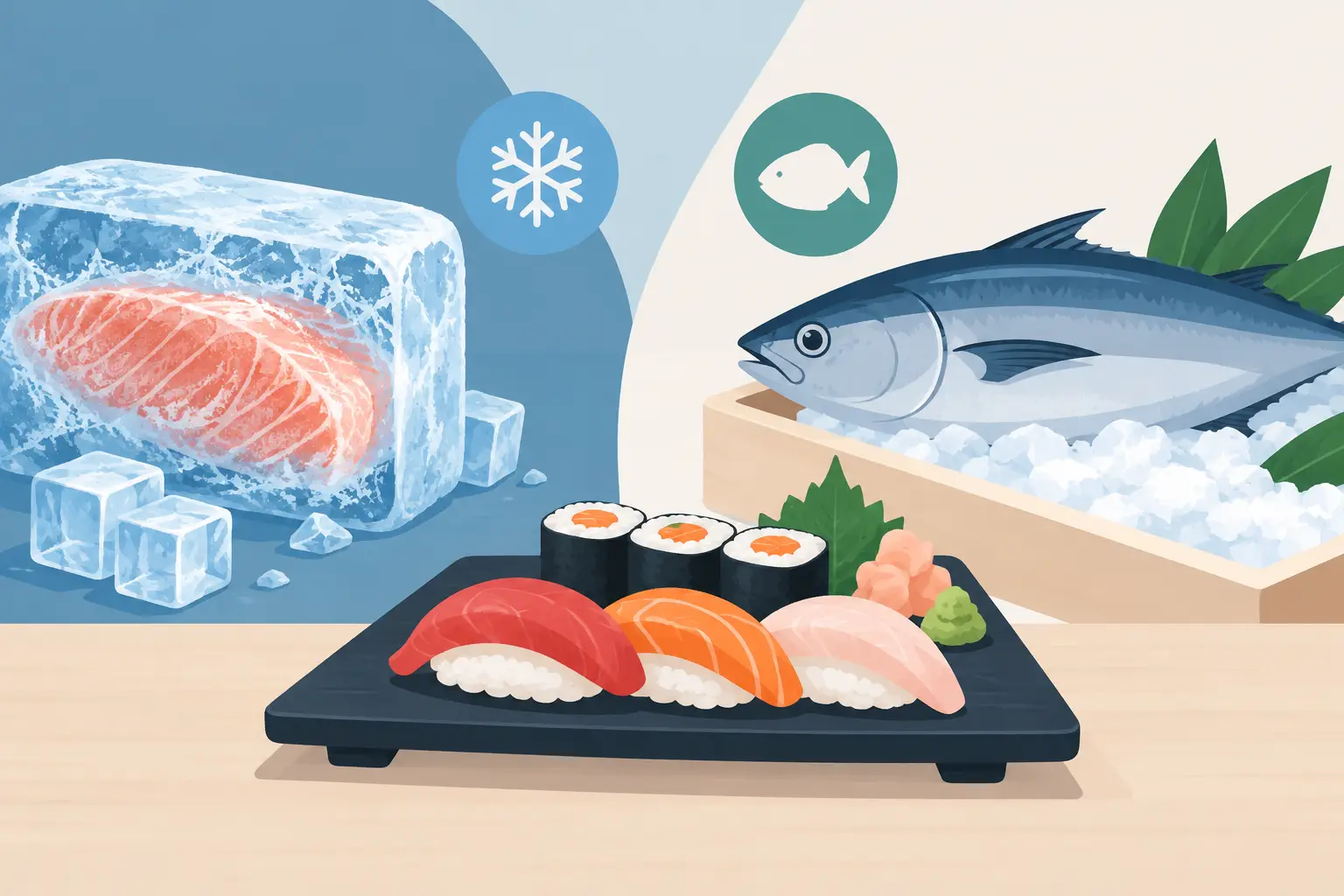
A beautiful piece of sushi can arrive at the counter looking impossibly fresh, yet the fish may have been frozen before the chef ever sliced it. Does sushi use frozen fish? Very often, yes - and that is not a shortcut or a sign that the fish is second-rate. In skilled hands, freezing is one of the tools that helps make raw fish safer, more consistent, and sometimes even better to eat.
The more useful question is not whether a fish was frozen. It is how it was sourced, handled, frozen, thawed, and prepared. Those details tell you far more about the quality of the sushi on your plate.
Why sushi chefs freeze fish
For many fish served raw, freezing is primarily a food-safety practice. Freezing at properly controlled temperatures for the required amount of time can kill parasites that may be present in wild fish. This is why food-safety guidance commonly calls for parasite destruction freezing for fish intended to be eaten raw, with exceptions for certain species and carefully raised fish.
Parasites are not a reflection of whether a fish is clean, expensive, or purchased from a respected market. They are part of the natural environment of many wild fish. A thoughtful sushi chef plans for that reality rather than treating it as an afterthought.
Freezing also gives a restaurant more control over timing. A whole fish may arrive in excellent condition, but different cuts reach their peak on different days. Properly frozen portions allow chefs to protect quality while serving a broader range of fish, including seasonal and harder-to-find varieties that do not arrive every morning.
That said, “frozen” covers a wide range of outcomes. Fish frozen quickly at very low temperatures, packaged carefully, and thawed under refrigeration can retain a clean flavor and pleasing texture. Fish that is frozen slowly, held too long, exposed to air, or thawed carelessly can become watery, dull, or soft. The process matters as much as the fish itself.
Fresh does not always mean never frozen
In sushi, freshness has a more precise meaning than “caught today.” A fish can be extremely fresh in the sense that it was handled immediately after harvest, chilled correctly, and brought into a chef’s hands with its flavor intact. It may still be frozen at some point for safety or logistics.
Conversely, a fish sold as never frozen is not automatically at its best. Some species improve after a short period of aging. During that time, the flesh can relax, moisture can redistribute, and savory character can develop. Serving fish too soon after it is caught can mean a firmer texture and a less developed flavor than the chef intends.
Tuna is a familiar example. High-quality tuna is frequently frozen, often at extremely low temperatures, to preserve its color, texture, and flavor during transport. This makes it possible for sushi restaurants in Los Angeles to serve excellent tuna beyond the narrow window when a particular fish is available locally. Many diners have enjoyed exceptional toro or akami without realizing that freezing played a role in getting it to the counter in prime condition.
The same principle applies to other fish, although each species behaves differently. Delicate white fish may benefit from a brief aging period and gentle refrigeration. Oily fish can be especially sensitive to temperature and oxygen. Shellfish, salmon, mackerel, and tuna each require their own handling decisions. There is no single rule that produces great sushi.
What happens when fish is frozen well
Freezing changes fish because water inside the flesh forms ice crystals. If those crystals grow large, they can damage the cell structure. When the fish thaws, it may lose liquid and feel mushy. That is the watery texture people associate with poorly frozen seafood.
Rapid freezing creates smaller crystals and limits that damage. Professional freezing methods, careful packaging, and stable storage temperatures help preserve the fish’s structure. A chef can then thaw it slowly under refrigeration, keeping the surface dry and the flesh cold until service.
For sushi, the final preparation also makes a difference. A chef may trim away a portion that has oxidized, score the skin, cure the fish lightly with salt or vinegar, or brush it with a sauce that suits its fat content. The goal is not to disguise the ingredient. It is to present the part of the fish that tastes most alive and balanced.
At a good sushi counter, a piece of fish should never be judged only by whether it was frozen. Notice its aroma, texture, temperature, and finish. Does it smell clean? Does it hold together softly rather than collapse? Is the rice warm enough to lift the fish’s flavor? Those are the details that reveal care.
When sushi may be served never frozen
Some sushi is served fresh, never frozen, particularly when a restaurant has access to a trusted local catch or a tightly managed supply chain. Certain farmed fish and particular tuna species may also fall under food-safety exceptions when they meet specific conditions. But “never frozen” is not a universal promise, nor should it be used as one.
A restaurant may choose never-frozen fish when it is the right call for that species, season, and arrival condition. A pristine local halibut or live shellfish might be best served with minimal delay. On another day, a carefully frozen Japanese fish may offer more dependable quality than a fish that spent too long in transit under less precise handling.
The chef’s responsibility is to make that judgment honestly. Great sushi is built on decisions, not slogans.
How sourcing affects frozen sushi fish
The path from water to restaurant matters. Fish that is bled, chilled, processed, and packed with discipline starts with a major advantage. When restaurants buy through experienced fishmongers and maintain close relationships with suppliers, they can ask better questions: When was it caught? How was it handled? Has it been frozen? At what temperature? How long has it been stored? What condition was it in upon arrival?
This is why sourcing knowledge matters as much as geography. “From Japan” or “local” may sound appealing, but neither label alone guarantees quality. A fish from Tokyo’s Toyosu Market can be extraordinary because it was selected, shipped, and handled with exceptional care. A fish from the West Coast can be equally compelling when it is in season and reaches the chef quickly.
At UO NIGIRI, owner-chef Yusuke Irie brings a fish-wholesale background to the choices behind the counter, sourcing from Toyosu Market, New Zealand, and the East and West Coasts. That access makes room for both familiar favorites and lesser-known fish, while the restaurant’s in-house preparation lets the team assess each arrival on its own terms. A whole wild Bluefin tuna, for example, is not one flavor or one texture - different cuts deserve different treatment.
Questions worth asking at a sushi restaurant
If you are curious about the fish in front of you, asking is part of the experience. A welcoming restaurant should be glad to explain what is seasonal, where a fish came from, and how it is best enjoyed.
Instead of asking only, “Is this fresh?” try asking what arrived that day, what the chef is excited about, or whether a particular fish is rich, delicate, firm, or lightly cured. If you have a food-safety concern, say so directly. Restaurants should be transparent about ingredients, raw preparations, and allergies.
For diners who are pregnant, immunocompromised, very young, or otherwise more vulnerable to foodborne illness, raw seafood requires additional care. Freezing for parasite control is valuable, but it does not eliminate every food-safety risk. A medical professional can offer guidance based on individual circumstances.
The best sushi experience is not built on a fear of frozen fish or a blind preference for never-frozen fish. It comes from trusting a chef who knows the difference, respects the fish, and serves each piece when it has the best chance to shine.
MEDIA

SIGN UP OUR NEWSLETTER
 13354 Washington Blvd.,
Los Angeles, CA 90066
Lunch: Temporarily Closed
Dinner: Mon - Sat 5:30 pm - 10:00 pm (Last Call 9:30 pm)
Sun Closed