Blog
Seafood Traceability Examples That Matter at Sushi
10.15.2026 | Blog
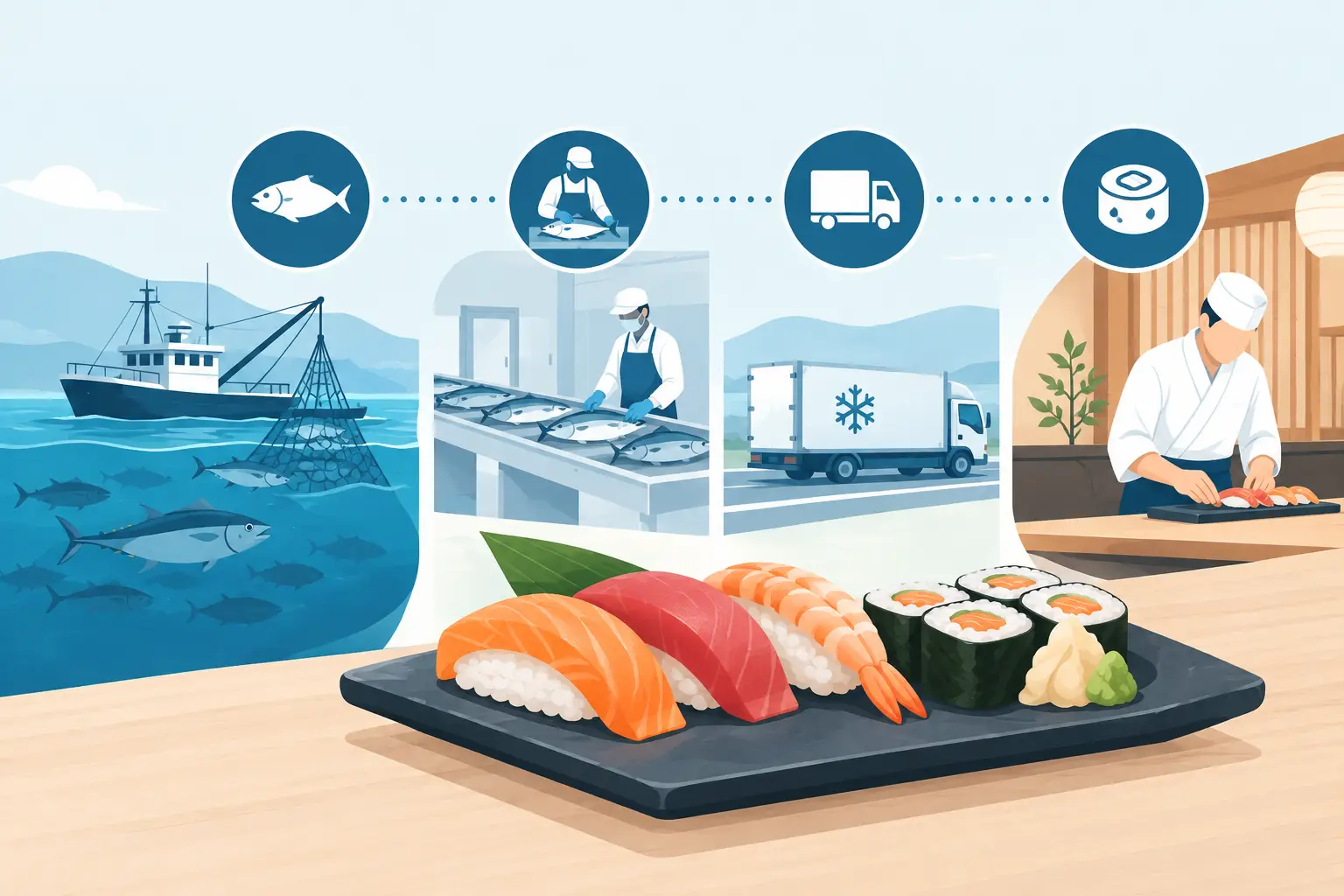
A beautiful piece of sushi has a story before it reaches the counter: where the fish was caught or raised, who handled it, how it traveled, and how carefully it was prepared. Seafood traceability examples make that story more than a marketing claim. They give diners useful context for judging freshness, seasonality, species, and the care behind each bite.
For sushi guests, traceability is not about memorizing paperwork over dinner. It is about knowing that the chef and restaurant take the fish seriously enough to ask the right questions before it becomes nigiri, sashimi, or a course in omakase.
What seafood traceability means in a sushi restaurant
Seafood traceability is the ability to follow seafood through the supply chain, from its original source to the restaurant. The details can vary by species and supplier, but the record may include the catch area or farm, harvest date, vessel or producer, landing location, processing facility, distributor, and delivery date.
A restaurant does not always receive every detail in the same format. A local fish may arrive with a direct relationship and a clear landing history, while an imported Japanese fish may come through an auction, exporter, importer, and specialized distributor. What matters is whether the chain of custody is clear enough for the buyer to verify what the fish is, where it came from, and how it has been handled.
That clarity supports better decisions. A chef can select fish at its seasonal peak, understand whether a species is wild or farmed, assess expected texture and fat content, and avoid buying seafood with vague or inconsistent identification. Diners benefit because the menu is built around real availability rather than a generic promise of “fresh fish.”
Seafood traceability examples from source to counter
1. Wild tuna with a documented landing and breakdown
Bluefin tuna is one of the clearest seafood traceability examples because a single whole fish creates a visible connection between purchasing, preparation, and the sushi served that night. A buyer may know the harvest region, the landing date, the weight and grade of the fish, and the supplier that received it.
Buying whole tuna also asks more of the restaurant. The team must break it down properly, protect different cuts at the right temperature, and use each section with intention. Akami, chutoro, otoro, and less familiar cuts do not behave the same way. Their flavor, fat, and ideal preparation can shift as the fish rests.
A whole-fish program is not automatically better than every pre-portioned option. It requires skilled handling and enough demand to use the fish well. But when the restaurant has the expertise and volume, it offers a more direct view of both sourcing and craftsmanship. At UO NIGIRI, owner-chef Yusuke Irie’s fish-wholesale background informs a sourcing approach that includes whole, wild Bluefin tuna and in-house preparation.
2. Fish purchased through a Japanese market network
A seasonal Japanese fish may be traced through a different path. It can begin with a fisherman or regional landing port, move to a wholesaler, then be sold through Tokyo’s Toyosu Market before export and distribution in Los Angeles. That is a longer route than buying directly from a nearby dock, but length alone does not define quality.
For certain species, Japanese market networks provide access to exceptional seasonal fish and specialized grading knowledge. The key questions are how quickly the fish moved through the chain, whether temperature was controlled, and whether the restaurant’s supplier can identify the product accurately. A name on a menu matters less if nobody can explain which fish it refers to or how it arrived.
This is especially meaningful with fish that may be uncommon on standard American sushi menus. A chef who knows the sourcing path can explain what makes a particular catch special without turning dinner into a lecture: perhaps it is available for a short season, perhaps it has a firmer texture than a familiar substitute, or perhaps it is best served simply with a small amount of salt, citrus, or soy.
3. Local catch identified by species and harvest area
“Local” can be a useful word, but it should be specific. A traceable local seafood purchase might identify the species, the California landing area, the vessel or fishery, and the date it was landed. That gives the restaurant a better picture of what is actually being offered.
This matters because common market names can hide major differences. Rockfish is a broad category, for example, and “snapper” is often used loosely in seafood markets. Proper species identification helps chefs describe the fish accurately and helps diners understand what they are eating.
Local seafood is not always the freshest choice in every circumstance. A well-managed product from New Zealand or Japan can arrive in excellent condition, while a nearby fish can suffer from poor handling. The better standard is careful sourcing, cold-chain discipline, and an honest understanding of each fish’s journey.
4. Farmed salmon with producer and feed information
Traceability applies to farmed seafood as much as wild catch. For salmon, a restaurant may be able to identify the farm region, producer, harvest date, processing method, and whether the fish was raised under a particular certification or husbandry program.
Farmed salmon is often discussed as though it is one single category. It is not. Farming practices, water conditions, feed, stocking density, and harvesting standards differ from producer to producer. Those differences can affect flavor, fat level, color, consistency, and environmental performance.
For diners, the practical takeaway is simple: a restaurant should be able to distinguish vague sourcing from informed sourcing. If salmon is a regular part of the menu, knowing the producer and the handling standards is more meaningful than relying on a broad label alone.
5. Shellfish tagged to a harvest area
Shellfish traceability is particularly direct because oysters, clams, and mussels are commonly accompanied by harvest tags. Those records identify where and when the shellfish were harvested and are tied to food-safety controls for the growing area.
The tag system is a useful reminder that traceability serves two purposes. First, it helps protect guests by allowing product to be traced quickly if a safety issue is identified. Second, it preserves the character of the ingredient. Oysters from different bays can taste distinctly different, shaped by salinity, currents, and season.
For a sushi restaurant, shellfish may be served raw, lightly cooked, or incorporated into a seasonal tasting. Knowing the harvest area gives the chef a stronger basis for serving it confidently and describing it honestly.
What diners can reasonably ask
You do not need to request a full chain-of-custody document at the table. Still, a few natural questions can reveal a great deal about a restaurant’s standards: Is this fish wild or farmed? Is it seasonal right now? Where is it from? Was it purchased whole or prepared in-house?
The best answers are usually clear and unforced. A knowledgeable server or chef may not know every detail for every fish at every moment, especially on a menu that changes with the market. But they should be able to share meaningful information about the fish’s origin, style, and why it was chosen.
Be cautious with claims that are broad but empty. “Fresh,” “premium,” and “sustainable” can be helpful descriptions only when they are supported by specifics. Freshness is shaped by harvesting, processing, temperature, aging, and preparation - not just by how close the source is. Sustainability depends on the species, fishery or farm, harvest method, and current conditions.
Why traceability changes the omakase experience
Omakase is built on trust. The guest gives the chef room to choose, and the chef responds with fish that is right for that moment. Traceability gives that trust a practical foundation.
It allows a menu to follow the market instead of forcing the same selections year-round. It supports thoughtful substitutions when weather, season, or availability changes. And it encourages chefs to use more of a fish with care, because they understand not only the name of the product but the work and people behind it.
The next time a chef places a piece of nigiri in front of you, consider asking one simple question: what is the story behind this fish? The answer can make an ordinary sushi dinner feel closer to the sea, the season, and the hands that brought it to your plate.
MEDIA

SIGN UP OUR NEWSLETTER
 13354 Washington Blvd.,
Los Angeles, CA 90066
Lunch: Temporarily Closed
Dinner: Mon - Sat 5:30 pm - 10:00 pm (Last Call 9:30 pm)
Sun Closed