Blog
Omakase Versus A La Carte: Which Sushi Meal?
08.20.2026 | Blog
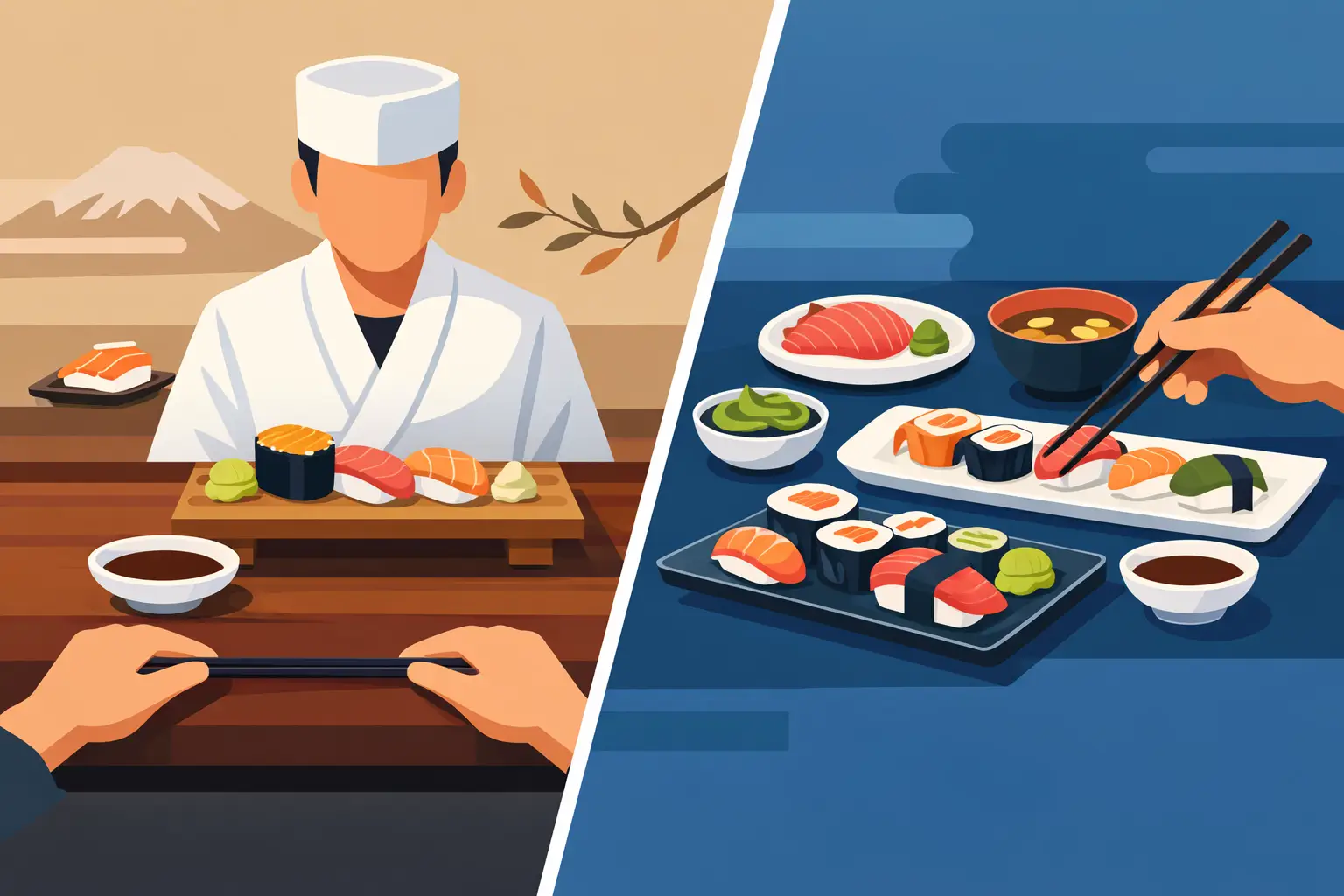
A sushi menu can ask two very different questions: “What are you craving?” or “What is best right now?” That is the real choice behind omakase versus a la carte. One puts the evening in the chef’s hands; the other lets you follow your own appetite, piece by piece.
Neither is automatically the better way to eat sushi. The right choice depends on how you want to dine, who is at the table, and whether you came for familiar favorites or a taste of what the market brought in that day.
Omakase Versus A La Carte: The Core Difference
Omakase translates loosely to “I leave it up to you.” In a sushi restaurant, it means the chef selects the progression of fish and prepares the meal around freshness, seasonality, texture, and balance. You are not simply ordering a set number of pieces. You are allowing the chef to build an experience.
A la carte means ordering individual items from the menu. Maybe that is a few pieces of salmon, yellowtail, and shrimp. Maybe it is a favorite roll, a bowl of rice, or a plate of sashimi shared across the table. You decide what arrives and in what quantity.
The distinction is simple, but the experience feels very different. Omakase is guided. A la carte is self-directed. One is especially rewarding when you are ready to try something new; the other is ideal when you already know exactly what you want.
Why Omakase Is About More Than a Set Menu
At its best, omakase reflects the fish available that day. A chef may begin with a lighter, clean-tasting white fish, move toward richer selections, then finish with a piece of fatty tuna or a hand roll that brings the meal to a satisfying close. The sequence matters. So do details such as the rice temperature, the cut of the fish, a small brush of sauce, or a touch of freshly grated wasabi.
That is why sourcing makes such a difference. Fish is not at its peak in the same way every day of the year. Some varieties are better in colder months, while others shine when waters warm. A chef who knows the market can choose fish for its condition rather than relying only on a fixed list of familiar names.
For diners, this creates a feeling of discovery without the pressure of having to study a long menu. You may taste a fish you would not have ordered because you did not recognize the name, then find it becomes the piece you talk about after dinner. The chef’s job is not to surprise you for the sake of it. It is to serve fish in the moment when it has something special to say.
Omakase also helps make a meal feel complete. When people order independently, it is easy to end up with several similarly rich pieces or to overlook a delicate fish that would have added contrast. A thoughtful course moves between lean and rich, soft and firm, familiar and less common, so every bite has a reason for being there.
When Omakase Is the Right Choice
Choose omakase when you want to be guided by seasonal fish, are open to trying a range of flavors, or are celebrating a date night, birthday, or evening that deserves a little more attention. It also works beautifully for someone who enjoys sushi but does not feel confident choosing between unfamiliar varieties.
It is not reserved for once-a-year occasions. An approachable omakase can be a satisfying weeknight dinner when you want excellent fish without spending the evening comparing menu descriptions. The value is in the chef’s selection and preparation, not in unnecessary ceremony.
There is one practical consideration: omakase works best with a little trust. If you strongly dislike certain fish, have an allergy, or only want a very specific order, say so before the meal begins. A good sushi team wants to understand your preferences, not test your limits.
The Case for Ordering A La Carte
A la carte sushi has its own pleasures. Sometimes the perfect meal is simply three pieces of your favorite nigiri, a crisp hand roll, and nothing else. You may be introducing a child to sushi, sharing with friends who have different tastes, or stopping in after work with a clear craving for Bluefin tuna.
Ordering a la carte gives you control over pace and budget. You can start with a few pieces and add more if the table is still hungry. You can focus on cooked items, vegetarian choices, or familiar fish. It is also a natural fit for takeout and delivery, when the meal needs to work around your evening rather than unfold course by course at the counter.
For experienced sushi diners, a la carte can be highly intentional. You might compare different cuts of tuna, order a favorite fish in both nigiri and sashimi form, or build a meal around lighter selections. There is no wrong way to order when you know what you enjoy.
When A La Carte Makes More Sense
A la carte is often the better choice when your group has varied appetites, you are dining quickly, or you want the comfort of sticking with known favorites. It can also be helpful for first-time sushi eaters, who may prefer to choose a few approachable pieces before branching out.
It is worth remembering that control comes with a trade-off. When you order only the names you recognize, you may miss the fish that is tasting best that day. The menu gives you freedom, but it cannot always communicate the small market details a chef sees immediately.
Fresh Fish Changes Both Experiences
Whether you choose omakase or a la carte, the quality of sushi begins well before it reaches the rice. How fish is purchased, transported, broken down, and stored affects its flavor and texture. A piece of tuna can be clean and deeply savory, or merely familiar. A delicate white fish can taste quietly sweet, or disappear beneath too much sauce.
At UO NIGIRI, owner-chef Yusuke Irie draws on his fish wholesale background to source from Tokyo’s Toyosu Market, New Zealand, and the East and West Coasts of the United States. The restaurant purchases whole, wild Bluefin tuna and prepares fish in-house, giving the team more control over quality and access to varieties that do not appear on every neighborhood sushi menu.
That approach benefits both ways of ordering. In omakase, it allows the chef to feature what is especially good at the moment. A la carte, it means a familiar order can still reflect serious attention to sourcing and handling. The fish may be recognizable, but the experience should never feel routine.
How to Choose for Your Next Dinner
If you are deciding between the two, begin with the question you want your dinner to answer. If the answer is, “Show me what is great today,” choose omakase. If it is, “I have been thinking about scallop nigiri all afternoon,” order a la carte.
For a date, omakase often creates an easy rhythm. There is less menu debate, more conversation, and a shared sense of anticipation as each piece arrives. For a family meal or a group with different comfort levels, a la carte can make everyone feel at home. One guest can try a rare fish while another enjoys salmon or a cooked roll.
Price matters, too, but it should be viewed in context. A high-priced omakase is not automatically more thoughtful, and a lower entry price does not mean a meal lacks care. Look for a restaurant that explains its fish, prepares it with confidence, and treats hospitality as part of the craft. A chef-selected meal starting at a comfortable price can make seasonal sushi part of regular life, not a distant special occasion.
The best choice may even change from visit to visit. Order omakase when curiosity leads the way. Choose a la carte when a particular piece is calling your name. And when you find a fish that makes you pause after the first bite, let that be a reason to return while the season is still on your side.
MEDIA

SIGN UP OUR NEWSLETTER
 13354 Washington Blvd.,
Los Angeles, CA 90066
Lunch: Temporarily Closed
Dinner: Mon - Sat 5:30 pm - 10:00 pm (Last Call 9:30 pm)
Sun Closed