Blog
10 Best Sushi Dishes for Groups to Share
10.13.2026 | Blog
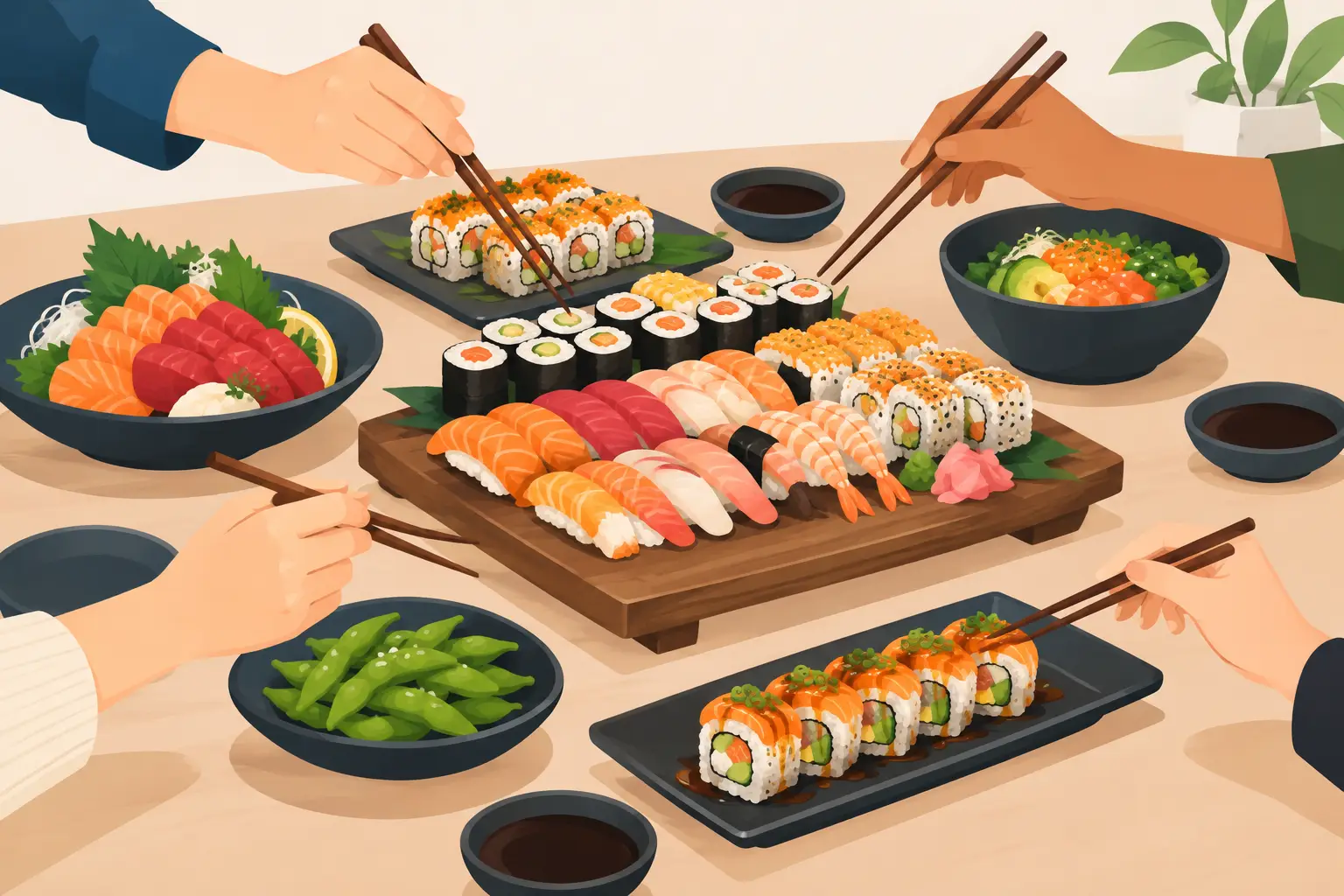
A group sushi dinner works best when nobody has to make the whole table’s decision alone. One guest wants classic salmon, another is hoping for something less familiar, and someone may be trying omakase for the first time. The best sushi dishes for groups create room for all of those tastes while keeping the meal generous, balanced, and easy to share.
The goal is not to order every item on the menu. It is to build a table with a few dependable favorites, a few seasonal selections, and enough variety that each person finds a bite worth remembering. When fish is fresh and carefully handled, even a simple plate of nigiri can become the center of the conversation.
Start With a Shared Sushi Strategy
For groups, ordering works better in rounds than in one oversized first order. Begin with lighter dishes and a small selection of sushi, then add more based on what the table enjoys. This prevents a pileup of rice-heavy rolls before guests have tried the seasonal fish or chef-selected pieces.
A useful starting point is to think in three parts: a shared appetizer or two, a mixed assortment of nigiri and sashimi, then a few rolls or warm dishes for contrast. The exact balance depends on the group. A table of longtime sushi fans may prefer more nigiri and sashimi, while a family dinner with different comfort levels may appreciate familiar rolls alongside more adventurous fish.
If your party is six or more, ask the server what is especially good that day. Seasonal availability is part of what makes sushi compelling. Fish that arrived in excellent condition may be offered in limited quantities, and a knowledgeable recommendation can give the table something more distinctive than an all-standard order.
Best Sushi Dishes for Groups: 10 Smart Choices
1. A Mixed Nigiri Assortment
A mixed nigiri assortment is the most efficient way to put several types of fish in front of a table. It lets guests compare clean, delicate white fish with richer salmon, tuna, or yellowtail without committing everyone to a full order of one item.
For a group, order enough pieces that each guest can try at least two or three varieties. Nigiri is also a good measure of a sushi restaurant’s craft: the rice should be lightly seasoned, properly formed, and proportioned to support the fish rather than compete with it.
2. Seasonal Sashimi
Sashimi gives the group a clear view of the fish itself. Without rice or sauces, guests can notice the texture, fat, sweetness, and clean finish of each slice. It is especially worthwhile when the restaurant sources according to the market rather than relying only on a fixed list.
Choose a mixed sashimi plate if your group includes curious diners. It provides a lower-commitment introduction to less familiar species and keeps the meal from becoming too filling too quickly.
3. Bluefin Tuna in More Than One Cut
Tuna offers a natural tasting progression for a table. Lean akami has a deep, clean flavor, while chutoro brings more softness and richness. Otoro is prized for its luxurious fat and tender texture, but its richness means a little goes a long way.
Ordering two or three tuna cuts lets guests taste why preparation and sourcing matter. At UO NIGIRI, whole wild Bluefin tuna is purchased and prepared in-house, making this kind of comparison especially meaningful. It is an easy way to turn a casual dinner into a shared tasting without making the occasion feel overly formal.
4. Salmon Nigiri or Salmon Sashimi
Salmon remains one of the most reliable choices for mixed groups. Its familiar flavor and supple texture make it approachable for newer sushi diners, yet high-quality salmon still rewards experienced guests.
A salmon order also helps balance brighter, firmer fish. Pair it with a lean white fish or tuna so guests can move between different textures instead of eating several similarly rich pieces in a row.
5. Yellowtail With Scallion or Citrus
Yellowtail has enough richness to satisfy guests who enjoy tuna, but it often carries a brighter, more delicate profile. A touch of scallion, ponzu, or citrus can sharpen its flavor without hiding the fish.
This is a particularly useful order for groups because it bridges familiar and more nuanced choices. It feels special, but it is rarely intimidating.
6. A White Fish Selection
White fish is where a chef’s market knowledge can really show. Depending on the season, this might mean snapper, fluke, sea bream, halibut, or another delicate selection. These fish are not interchangeable. Some are crisp and subtly sweet, while others have a softer texture or a gentle oceanic richness.
For a group, one or two white fish orders keep the spread light and varied. If the chef suggests a fish that is not on your usual order, consider adding it. The best surprise of the evening is often the piece nobody planned to try.
7. A Simple Tuna or Yellowtail Roll
Simple rolls are valuable because they make sharing easy. A tuna roll or yellowtail scallion roll gives guests an accessible, familiar bite and provides something comfortable for anyone who prefers straightforward sushi.
Keep at least one roll relatively simple. A table filled only with spicy mayonnaise, crunchy toppings, and sweet sauces can flatten the differences among the fish. One uncomplicated roll keeps the meal grounded.
8. One More Expressive Specialty Roll
A specialty roll can bring color, texture, and a little extra energy to the table. Choose one with a clear point of view rather than ordering several that taste similar. A roll with avocado may offer creaminess; one with tempura crunch can add contrast; a citrus-forward topping may brighten richer fish.
The trade-off is that elaborate rolls can become filling fast. For a group that also wants nigiri and sashimi, one or two specialty rolls are usually enough. Let them support the fish selection, not replace it.
9. Hand Rolls for the Final Round
Hand rolls are best ordered near the end, when guests are ready for something warm, crisp, and immediate. The nori should be eaten soon after it is made, so hand rolls are not ideal as a large, all-at-once opening order.
They are excellent for a smaller group or a table that wants a satisfying finish. Spicy tuna, salmon, yellowtail, and vegetable hand rolls give everyone an easy choice while adding a different texture from nigiri.
10. Chef-Selected Omakase
For a group that wants guidance, an approachable omakase course can remove the pressure of ordering while still leaving room for discovery. The chef can pace the meal and select fish based on freshness, season, and the strongest arrivals from the market.
This is particularly helpful when not everyone at the table knows the names of every fish. Rather than guessing, guests can taste thoughtfully chosen pieces and learn what they like together. It is also a strong option for celebrations, dates within a larger party, or a dinner where the group wants to focus on the experience rather than the menu.
How Much Sushi Should a Group Order?
There is no perfect count because appetites, side dishes, and alcohol all change the equation. Still, a useful approach is to start with two to three pieces of nigiri per person, one shared sashimi selection, and one roll for every two or three guests. Add from there after the first round arrives.
For hungrier groups, include warm dishes or another roll before ordering a large amount of extra rice. For a lighter dinner, prioritize sashimi, seasonal nigiri, and hand rolls. If there are children or guests who are less comfortable with raw fish, add cooked or vegetable options early so everyone has an easy place to begin.
Avoid ordering only one type of fish in bulk unless the group has a clear favorite. Variety is the advantage of dining together. A range of lean and rich fish, familiar and seasonal selections, and simple and expressive preparations makes the meal feel more generous without necessarily making it excessive.
A Few Table Habits That Make Sushi Better
Share the first pieces while they are at their best, especially nigiri and hand rolls. If soy sauce is offered, use it lightly. The chef may have already seasoned the fish, and too much soy can cover the details that made that piece worth ordering.
Wasabi is equally personal, but it does not need to be mixed into soy sauce. Try a piece as presented first. If you want more heat, add a small amount to the fish. Ginger is best used as a palate cleanser between different fish rather than placed on top of every bite.
Most of all, leave room for a recommendation. A group dinner is one of the best settings for tasting something new, because no one has to take the leap alone. Order a familiar favorite, then let one market-fresh piece become the reason everyone talks about coming back.
MEDIA

SIGN UP OUR NEWSLETTER
 13354 Washington Blvd.,
Los Angeles, CA 90066
Lunch: Temporarily Closed
Dinner: Mon - Sat 5:30 pm - 10:00 pm (Last Call 9:30 pm)
Sun Closed