Blog
Omakase Lunch Versus Dinner: Which Is Right?
09.11.2026 | Blog
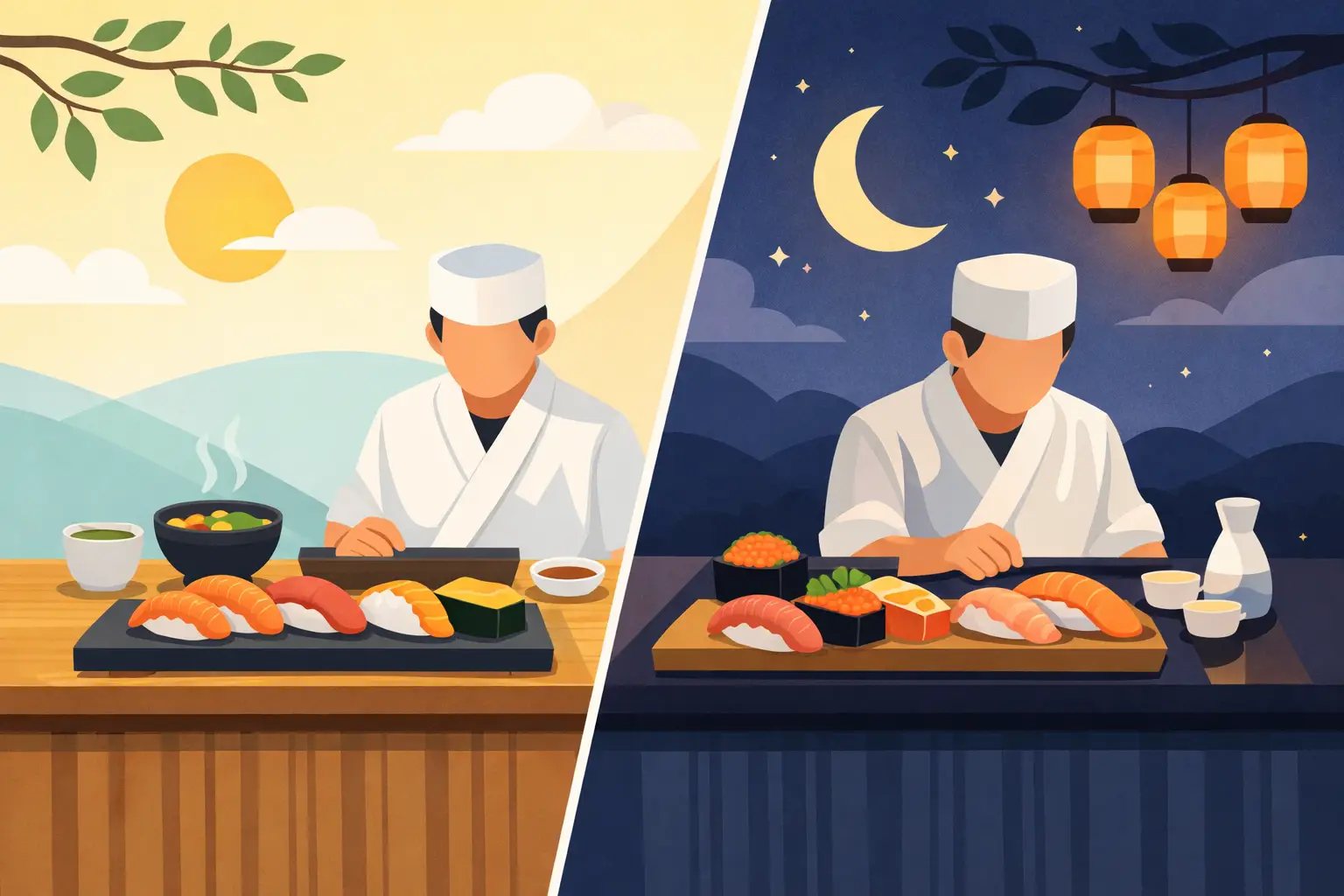
A chef places a piece of seasonal fish in front of you, and the decision between omakase lunch versus dinner suddenly feels less like a question of time and more like a question of mood. Do you want a focused midday meal that makes an ordinary weekday feel special, or a slower evening experience built for conversation, dates, and celebration?
Both can be excellent choices. The better one depends on your schedule, appetite, budget, and what you hope to remember when the meal is over. At its best, omakase is not defined by the hour. It is defined by the care behind each piece of sushi: the fish selected, the preparation, the rice, and the sequence chosen by the chef.
Omakase Lunch Versus Dinner: The Main Difference
Lunch and dinner omakase often share the same core idea: trust the chef to serve a progression of sushi based on the day’s best available fish. The differences tend to come from pacing, course length, atmosphere, and price rather than a completely separate standard of quality.
Lunch is usually more direct. Many diners have a meeting to return to, errands to finish, or only an hour available before the afternoon begins. A lunch omakase can offer a satisfying sampling of nigiri without asking for an entire evening. It is a good fit for people who want chef-selected sushi but prefer a quicker, more casual experience.
Dinner generally gives the meal more room to unfold. There may be a broader range of fish, a longer progression, or more time between courses. The room itself often feels different after dark: less rushed, more social, and better suited to lingering over sake or sharing the experience with someone else.
Neither is automatically better. A shorter lunch can be every bit as memorable when the fish is handled well and the chef has chosen with intention. Dinner simply gives more space for the meal to become the main event.
Why Lunch Omakase Makes Sense
For Westside diners, lunch omakase can turn a workday into something worth looking forward to. It works especially well when you want a meal that feels thoughtful but not overly formal. Instead of spending lunch deciding among a long menu, you let the chef guide the experience and enjoy a carefully chosen sequence.
Price is often part of the appeal. Lunch courses are commonly designed to be more accessible than dinner, whether that means fewer pieces, a simpler format, or a more streamlined service. That makes omakase easier to enjoy regularly rather than saving it only for birthdays and major anniversaries.
Lunch also favors clarity. Your palate is fresh, the dining room may be calmer, and the meal has a pleasant sense of purpose. You can taste familiar favorites such as salmon, yellowtail, and tuna alongside a seasonal selection you may not have ordered on your own. For someone new to omakase, that gentle guidance is one of the best reasons to start at lunch.
There are trade-offs. If you are very hungry, hoping for a long date-night meal, or eager to explore the widest possible variety of fish, a shorter lunch course may feel too brief. It is worth viewing the course as its own experience, not as dinner at a discount.
Best occasions for lunch
Lunch omakase fits a business lunch with a client who appreciates good food, a weekday date, a solo break from routine, or a quick celebration after an appointment nearby. It can also be a smart choice for diners who care about quality but do not need every meal to be a three-hour occasion.
It is especially appealing when the restaurant offers approachable courses. At UO NIGIRI, omakase starts at $38, making it possible to enjoy chef-selected sushi without treating the meal as an untouchable luxury. The goal is not to rush you through fish. It is to make serious sushi feel within reach.
What Dinner Omakase Adds
Dinner has an advantage when time is part of what you are buying. An evening reservation allows you to settle in, put away your schedule, and pay closer attention to the progression from one piece to the next. The meal can become a shared ritual rather than simply the answer to hunger.
This is often when diners are most open to trying unfamiliar fish. A chef may feature a rarer selection with a different texture or a richer flavor than the usual sushi menu choices. The contrast between lean and fatty fish, delicate white fish and bolder cuts, can feel more pronounced when you are not watching the clock.
For a date, dinner naturally creates more room for conversation. For a birthday or family milestone, it gives the table time to mark the occasion. For sushi enthusiasts, it can be an opportunity to ask questions and follow the chef’s choices more closely.
Dinner may also offer more flexibility for a larger appetite. That does not always mean every dinner omakase is dramatically longer, but it can mean you have more time to add sushi, enjoy side dishes, or continue with another round if something on the counter catches your attention.
The trade-off is straightforward: dinner can cost more and require more planning. Popular evening hours may call for a reservation, and a full omakase is best enjoyed when you can arrive on time and stay present. If your evening is packed or your appetite is modest, lunch may actually provide the more satisfying experience.
Fresh Fish Matters at Any Hour
The lunch-versus-dinner question should never distract from the most important part of omakase: the fish. A beautiful setting and a long course cannot make up for seafood that lacks freshness, proper temperature, or careful preparation.
Seasonality matters because the best fish changes. Some species are richer at certain points in the year, while others are prized for their clean, delicate character in a particular season. Sourcing also matters. Fish from Tokyo’s Toyosu Market, New Zealand, and the East and West Coasts can offer distinct qualities, but only when it is selected with knowledge and handled correctly after it arrives.
That is why a chef’s background can make a real difference. Familiarity with wholesale markets, whole-fish purchasing, and in-house preparation creates more opportunities to serve fish at its best. It can also bring less common varieties to the counter, giving diners a reason to return instead of ordering the same predictable set every time.
Bluefin tuna is a good example. Different cuts deliver very different experiences, from lean akami to richer toro. Buying whole wild Bluefin and preparing it in-house gives a restaurant more control over how those cuts are portioned and presented. Whether you come for lunch or dinner, that attention is what turns a piece of tuna into something memorable.
How to Choose the Right Omakase for Your Day
Start with the practical question: how much time do you have? If you need to be back at your desk, have a reservation before an afternoon flight, or want a polished meal without losing half the day, lunch is the natural choice. If you can relax and let the meal set the pace, dinner is likely to suit you better.
Then consider your purpose. Lunch is excellent for treating yourself, introducing a friend to omakase, or making a regular weekday feel less ordinary. Dinner is better when the people at the table and the time spent together are as important as the sushi itself.
Your appetite matters too. Do not choose dinner simply because it sounds more impressive. A well-composed lunch can be satisfying, while a full evening course may be exactly right after a light day of eating. If you are unsure, ask about the number of pieces, the overall format, and whether additional sushi can be ordered.
Finally, think about how adventurous you feel. Both meals can include seasonal surprises, but dinner may be the moment to slow down and try a fish you do not recognize. Omakase is built on trust, and the most rewarding choice is often the one that lets the chef show you something beyond your usual order.
The right time for omakase is the time when you can enjoy the fish with attention. A quick lunch can offer a bright pause in the middle of the day; dinner can turn fresh, carefully prepared sushi into the reason you gathered in the first place.
MEDIA

SIGN UP OUR NEWSLETTER
 13354 Washington Blvd.,
Los Angeles, CA 90066
Lunch: Temporarily Closed
Dinner: Mon - Sat 5:30 pm - 10:00 pm (Last Call 9:30 pm)
Sun Closed