Blog
Tuna Sourcing: What Great Sushi Starts With
09.13.2026 | Blog
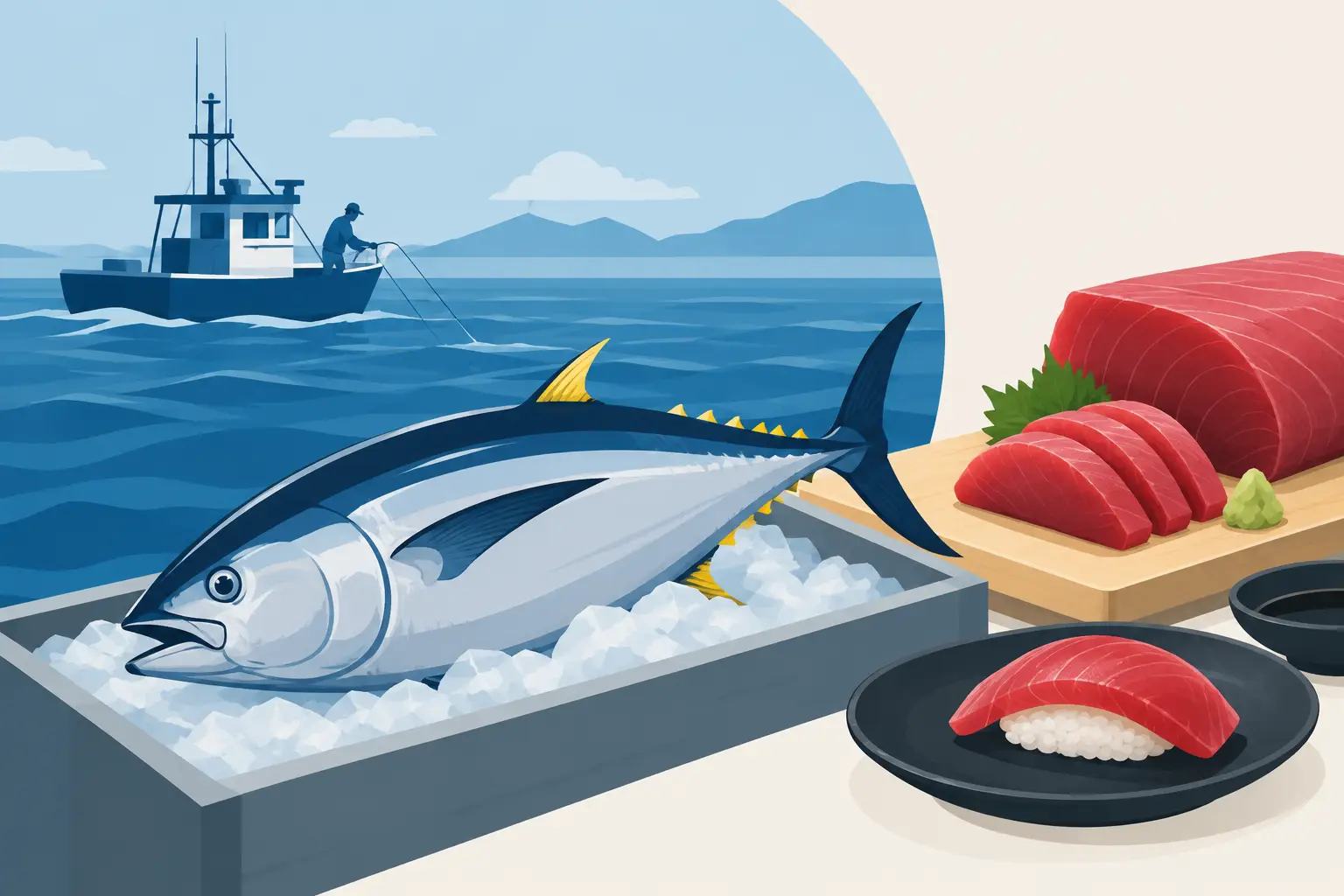
A piece of tuna can look simple on the rice, but it carries a long chain of decisions behind it. Tuna sourcing begins well before a chef makes the first cut: which fish is chosen, where it was landed, how it traveled, whether it was bought whole, and how carefully it is prepared all shape what reaches your plate.
For sushi diners, freshness is more than a buzzword. It is the clean flavor of akami, the satisfying richness of toro, and the way each piece feels balanced rather than heavy. Good tuna should not need an elaborate explanation at the counter. You should be able to taste the care in the fish itself.
Why Tuna Sourcing Matters in Sushi
Tuna is not one uniform ingredient. A fish’s species, size, diet, season, water temperature, handling, and aging all affect its character. Two cuts labeled bluefin can have very different color, fat distribution, and flavor. That is why sourcing is not simply about finding tuna. It is about selecting the right fish for the moment.
At a sushi restaurant, tuna may be served in several forms. Akami is the lean, deep-red portion with a clean and focused flavor. Chutoro offers a middle ground, with soft fat woven through the meat. Otoro comes from the richest belly sections and has a fuller, melting texture. Each cut asks for a different touch from the chef, and each depends on the condition of the whole fish.
A well-sourced tuna gives a chef options. It can be served plainly when its flavor is especially clear, lightly seasoned when it needs brightness, or paired with a small amount of ginger, scallion, or soy to bring out a particular quality. When the fish is exceptional, the goal is not to cover it. The goal is to let it speak.
Tuna Sourcing Is a Chain of Decisions
The path from ocean to sushi bar is rarely straightforward. Tuna may be purchased through fishing vessels, auctions, specialty distributors, or direct fishmonger relationships. Some fish arrive from domestic coasts, while others are selected from Japanese markets or international seafood regions. The best approach depends on the species, availability, season, and the standard a restaurant expects to serve.
Buying whole tuna offers a meaningful advantage when a restaurant has the knowledge and volume to handle it well. Instead of receiving only pre-portioned cuts, the chef can inspect the fish as a complete product and decide how each section should be used. The loin, belly, collar, and smaller sections all have distinct qualities. Careful breakdown makes it possible to serve the best portions at their best moment rather than treating every cut the same.
That process also takes skill. A whole tuna is not automatically better simply because it is whole. It must be stored at the right temperature, broken down cleanly, trimmed thoughtfully, and used on an appropriate schedule. Poor handling can waste a beautiful fish. Experienced preparation protects the value of the catch and preserves the qualities diners come for.
Fresh Does Not Always Mean “Caught This Morning”
For many foods, immediate service sounds like the obvious definition of freshness. Tuna is more nuanced. Depending on the fish, a period of controlled resting can improve texture and flavor. This allows natural changes in the muscle to develop a more tender bite and deeper umami.
The ideal timing depends on the individual fish. Lean cuts may show their cleanest character at one point, while fatty belly cuts may benefit from a different amount of resting. Temperature control matters throughout. A fish that has been handled with discipline can be more pleasurable after proper aging than one rushed to the counter without enough care.
This is one reason a chef-selected omakase experience can be so rewarding. The chef is not only choosing what fish is available. They are choosing what is ready. A tuna that is perfect tonight may be presented differently tomorrow, even if it came from the same fish.
Wild Bluefin and the Value of Whole-Fish Knowledge
Wild bluefin tuna is prized for its range of texture and flavor, especially across the different sections of the fish. It can offer lean meat with mineral depth as well as luxurious, finely marbled belly cuts. But bluefin is not a guarantee of quality by name alone. The individual fish still matters.
Size can influence fat content and the proportion of usable cuts. Season affects how the fish eats. Its origin can suggest certain characteristics, but it cannot replace firsthand evaluation. A knowledgeable buyer considers the complete picture: appearance, firmness, color, fat, aroma, and how the fish is likely to perform after preparation.
At UO NIGIRI, owner-chef Yusuke Irie draws on fish wholesale and culinary experience to purchase whole, wild bluefin tuna and prepare it in-house. That direct fishmonger perspective matters because it connects the buying decision to the final nigiri. The person who understands the fish at purchase also understands how to present its strongest cuts to guests.
For diners, that can mean seeing different tuna preparations over time. One visit may emphasize a beautifully lean akami. Another may feature a particularly generous chutoro or a richer toro course. Seasonal variation is not inconsistency. It is the point of working with market-fresh fish.
What Responsible Tuna Sourcing Requires
Questions about tuna sourcing also include the health of the ocean. There is no single shortcut for judging responsibility. Species, fishing method, fishery management, catch area, season, and supply-chain transparency all matter. A blanket statement about any one type of tuna can miss important differences between fisheries.
Restaurants and seafood buyers have to balance quality with informed purchasing. That means asking where fish came from, how it was caught, whether documentation is available, and what current conditions may affect supply. Availability should never become an excuse to buy blindly.
For guests, it is reasonable to ask thoughtful questions. What kind of tuna is being served? Is it a seasonal selection? Is the restaurant buying whole fish or receiving prepared cuts? A good sushi restaurant should welcome genuine curiosity without making dinner feel like a lecture.
There are trade-offs, too. A particular fish may be harder to find at certain times, and a chef may choose a different species or cut when it is the better option. That is not a compromise when the choice is made honestly. It is a sign that the menu follows the fish rather than forcing the fish to follow a fixed menu.
How Sourcing Changes the Experience at the Counter
The difference between ordinary tuna and carefully sourced tuna is often quiet. It may be the way the fish holds together without feeling dry. It may be a clean finish rather than a lingering metallic note. It may be the contrast between a lean piece that tastes vivid and a fatty piece that feels rich but still composed.
Rice plays a role as well. Tuna nigiri is a conversation between fish, rice temperature, seasoning, and portion size. With a richly marbled cut, the chef may use a slightly smaller piece or adjust the seasoning to keep the bite balanced. With lean tuna, the rice can support its delicate flavor without overwhelming it.
That attention is especially valuable in casual omakase dining. An approachable meal does not need to lower its standards. It can simply make excellent fish easier to enjoy on a weeknight, on a date, or when a familiar sushi craving deserves more than a routine order.
The next time tuna arrives at the counter, take a moment before adding soy sauce. Notice its color, its cut, and the way it meets the rice. The best piece often asks for very little beyond your attention.
MEDIA

SIGN UP OUR NEWSLETTER
 13354 Washington Blvd.,
Los Angeles, CA 90066
Lunch: Temporarily Closed
Dinner: Mon - Sat 5:30 pm - 10:00 pm (Last Call 9:30 pm)
Sun Closed